
Sumer: From Temple Cities to the Akkadian Empire
Story4500–2334 BCE: how cities, ledgers and kingship took shape in Mesopotamia
Around 4500 BCE Eridu in southern Mesopotamia became one of the earliest cities, its temple built on stacked platforms. Around 4100 BCE counting tokens and pictographs appeared; around 4000 BCE Uruk became the largest city of Mesopotamia and a temple economy and bureaucracy took shape; by about 3700 BCE irrigation-supported city-states had emerged. The long urbanisation of 3500–3000 BCE left proto-cuneiform tablets from Uruk IV with about two thousand distinct signs; by 3200 BCE writing had become a systematic tool of economic management, and by 3000 BCE cuneiform had matured. Around 2700 BCE epic tradition made Gilgamesh king of Uruk. In 2334 BCE Sargon seized power, founded the Akkadian Empire, defeated Lugalzagesi and unified the Sumerian city-states. This story uses ten nodes to trace how cities, writing and kingship generated one another, and how the independence of the city-state ended before an empire.
Sumerian politics did not begin in a palace but in temple storage, irrigation organisation and administrative accounting. The city concentrated population, surplus and records in one place; a temple economy needed an institution that could register grain, livestock and labour, so writing grew first as a ledger and only later as epic. The city-state gave kingship a stage but no stable boundary; under Sargon, the independence of the city-states gave way to a unified empire. The "birth of civilisation" here is irrigation, city, writing and violence appearing together, not a simple line of progress from temple to emperor.
Chapter-level sources; key claims checked.
Chapter timeline
Chapters in reading orderAll anchors are approximate region-level placements; they are not precise sites. Chapters without coordinates are listed below by region only.
Chapter contents10 chapters
- Eridu: a city begins with a temple
- Tokens and pictographs: the prelude to writing
- Uruk: the largest city and its temple economy
- The urban revolution: irrigation, temples and city-states
- Uruk's urbanisation: a long process
- Proto-cuneiform: reed stylus and clay tablet
- Administrative ledgers: how writing managed the city
- Cuneiform matures: entering recorded history
- Gilgamesh: from king to epic
- Sargon: the end of the city-state order
The story, chapter by chapter
Each chapter opens the underlying event- 01
Eridu: a city begins with a temple
Around 4500 BCE, Eridu in southern Mesopotamia developed into one of the world's earliest cities, with a population of about 5000. Eridu featured a large temple dedicated to the water god Enki, built on superimposed platforms that became the prototype for the later Mesopotamian ziggurat. Eridu is also the first city in the Sumerian King List where kingship is said to have descended from heaven.
Around 4500 BCE Eridu had about 5,000 residents; its temple to the water god Enki stood on stacked platforms that prefigured the ziggurat, and the Sumerian King List names it first among cities where kingship descended from heaven.
Around 4500 BCE Eridu in southern Mesopotamia developed into one of the world's earliest cities, with about 5,000 residents. It had a large temple to Enki, the water god, built on stacked platforms that became the prototype for the later Mesopotamian ziggurat.
Eridu was more than a place where many people lived. The temple needed to store grain, organise ritual and allocate labour, so the city was at once a ritual centre, a warehouse and a settlement. The Sumerian King List names Eridu as the first city where kingship descended from heaven, which shows how closely city and kingship were bound in later memory.
But the King List is a later political narrative, not a contemporary archive. Eridu can only be called one of the earliest cities. Only by looking at temple, storage and population together can we see the city not as a sudden miracle but as the accumulation of settlement, irrigation and cult organisation.
Sources: 3 event claims, 3 sourced; source cards src-b3w-sumer-cities-01, src-b3w-sumer-cities-03 (background only).
SourcesEridu — Wikipedia backgroundSumerian King List — Wikipedia background
- 02
Tokens and pictographs: the prelude to writing
Around 4100 BCE Mesopotamia's accounting tokens and pictographs were already in use; these tokens are seen as precursors of cuneiform.
Around 4100 BCE Mesopotamia's accounting tokens had been in use for millennia; by the mid-fourth millennium BCE, animal-shaped tokens from Tell Brak were seen as prototypes of some Sumerian pictographs, and the proto-literate phase continued into the 32nd century BCE.
Around 4100 BCE Mesopotamia saw proto-counting and pictographic signs. People used tokens, marks and simple images to record goods and quantities. These were not yet full writing, but they were its direct prelude.
The records solved a practical problem: once grain, livestock and labour entered public storage, memory was no longer enough. Who had delivered how much, who had received how much, and when it would be returned all needed a mark that another person could read.
Writing was not invented on a single day. It appeared first as a tool for counting and marking, and only after a long time acquired grammar and narrative. In other words, people had to learn to keep accounts before they could write epic.
Sources: event record with 3 claims, 3 sourced; source card src-b3w-sumer-cities-06 (Wikipedia lead and article, background only); L2 review, machine extract plus manual comparison.
SourcesCuneiform — Wikipedia backgroundSumer — Wikipedia background
- 03
Uruk: the largest city and its temple economy
Sumerian Uruk grows into the largest city of Mesopotamia; temple economy and bureaucratic administration take shape, birthing urban civilization.
Around 4000 BCE Uruk grew into the largest city of Mesopotamia; a temple economy and bureaucratic administration took shape, and urban civilisation acquired its outline.
Around 4000 BCE Uruk in Sumer grew into the largest city of Mesopotamia. A temple economy and bureaucratic administration took shape there, and the outline of urban civilisation became visible.
As a city grows, more people stop farming directly and depend on storage, distribution and public works. The temple, as the largest economic institution, had to record harvests, arrange labour and distribute products; an administrative staff appeared. The city was not a pile of houses but an institution that concentrated the surplus of the countryside and redistributed it.
Uruk's size made it a centre, but a centre is not an empire. It remained a city-state: a city with its surrounding countryside, organised around its own temple, ruler and armed force. The next change was the spread of such city-states across southern Mesopotamia.
Sources: 8 event claims, 7 sourced; source cards src-b3w-sumer-cities-01, src-b3w-sumer-cities-02 (background only).
Uruk.Ameeryahya84, 2015-04-17 · Wikimedia Commons · CC BY-SA 4.0 · CC-BY-SA-4.0 SourcesEridu — Wikipedia backgroundSumer — Wikipedia background
- 04
The urban revolution: irrigation, temples and city-states
Around 3700 BCE southern Mesopotamia entered the Uruk period; irrigation and canal trade supported temple-centred cities of over 10,000 people, and Uruk surpassed 50,000 inhabitants.
Around 3700 BCE southern Mesopotamia entered the Uruk period; irrigation and canal trade supported temple-centred cities of over 10,000 people, and Uruk surpassed 50,000 inhabitants.
Around 3700 BCE early city-states such as Uruk appeared in southern Mesopotamia. Irrigation supported a growing population, and temple economy and incipient cuneiform grew together. The event record calls this the earliest wave of humanity's “urban revolution”.
Irrigation did not end with digging a canal. It required continuous maintenance, water allocation and cooperation across villages, and those tasks bound the surrounding people into a larger organisation. The city therefore became not only a market but a centre for water and storage management.
The rise of the city-state made the political unit smaller: not all of Mesopotamia, but one city and its hinterland. It brought a tighter community and more frequent border conflict at the same time. Sumerian city-state history began as a history of competition.
Sources: event record with 5 claims, 5 sourced; source card src-b3w-sumer-cities-02 (Wikipedia lead and article, background only); L2 review, machine extract plus manual comparison.
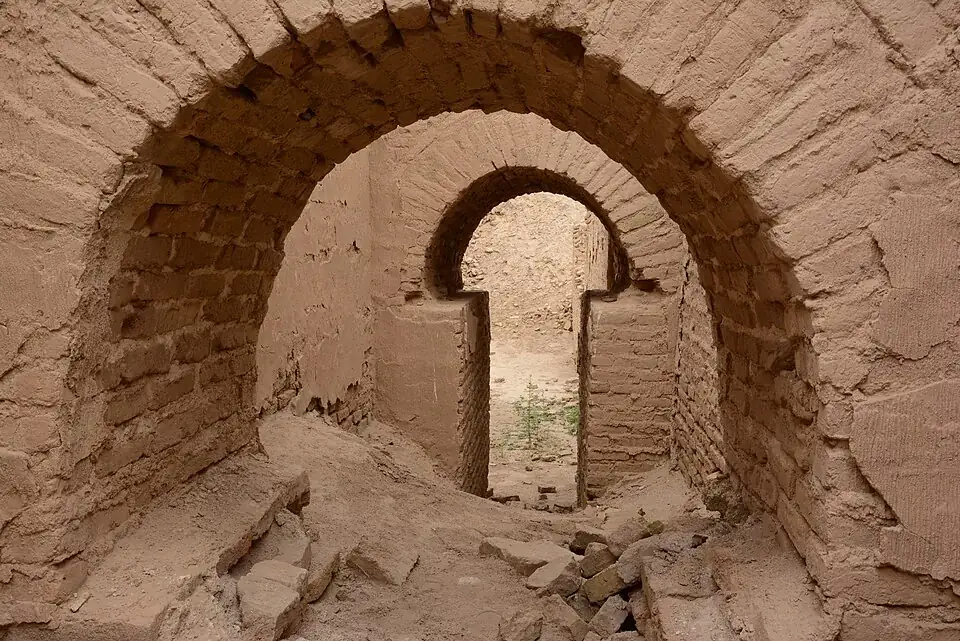
Uruk.Osama Shukir Muhammed Amin, 2019-03-14 · Wikimedia Commons · CC BY-SA 4.0 · CC-BY-SA-4.0 SourcesSumer — Wikipedia background
- 05
Uruk's urbanisation: a long process
Cities developed across Mesopotamia around 3500–3000 BCE, with Uruk a major centre. Monumental buildings and administrative records formed part of this process. The range describes urban development rather than a single dated founding ceremony.
From about 3500 to 3000 BCE cities across Mesopotamia kept developing, with Uruk a major centre; monumental buildings and administrative records emerged with the urban economy. This was not a single founding ceremony.
From about 3500 to 3000 BCE cities across Mesopotamia kept developing, with Uruk one of the most important centres. Monumental buildings and administrative records appeared alongside the urban economy.
The event record stresses that this is a long process, not a founding ceremony in a single year. The city was not “finished” on one day; over centuries it absorbed population, expanded its temples and multiplied its records.
Seeing urbanisation as a process changes our understanding of the “origin of civilisation”. What matters is not the dedication of a single monument but the growing number of people who depend on storage, markets and administrative institutions in a city. The seeds of writing and the state sprout inside that everyday dependence.
Sources: 7 event claims, 7 sourced; source cards src-b3w-sumer-cities-04, src-b3w-sumer-cities-02 (background only).
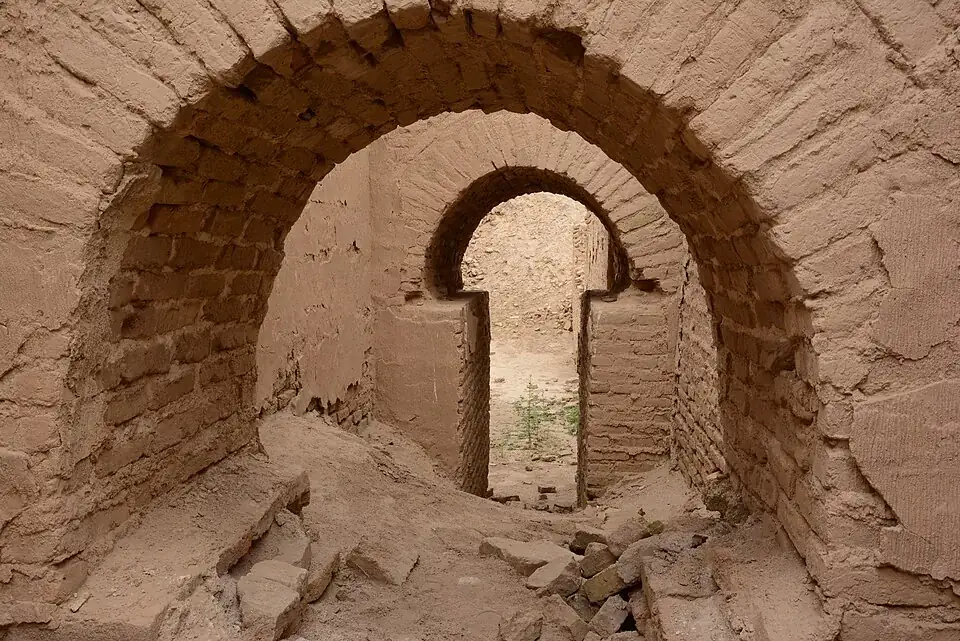
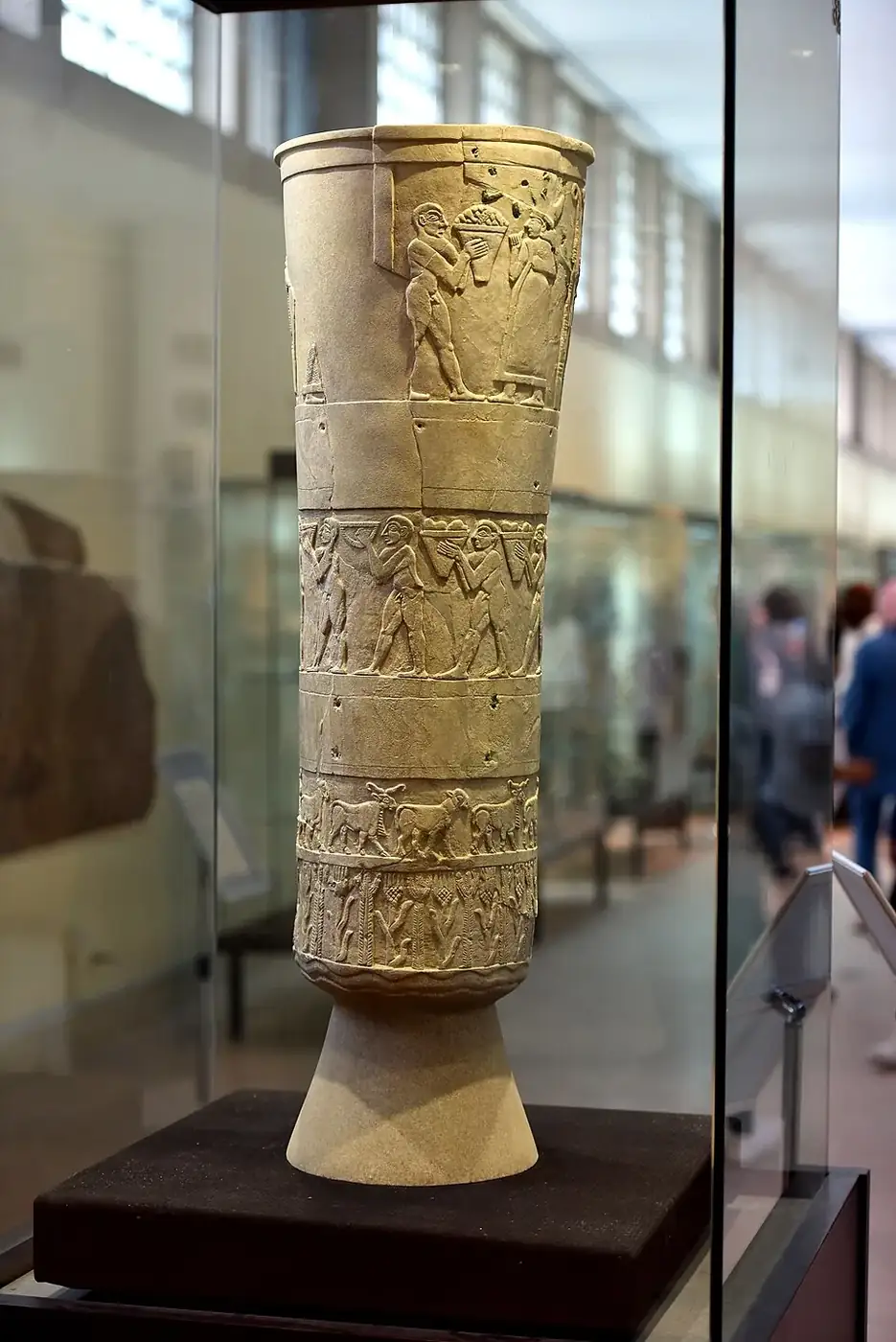
Uruk.Ameeryahya84, 2015-04-17 · Wikimedia Commons · CC BY-SA 4.0 · CC-BY-SA-4.0 SourcesHistory of Sumer — Wikipedia backgroundSumer — Wikipedia background
- 06
Proto-cuneiform: reed stylus and clay tablet
Around 3400-3200 BCE (Uruk IV layer), priests and administrators at Uruk used sharpened reeds to incise signs on moist clay tablets to record the distribution of grain, livestock, and labor. These proto-cuneiform signs were initially pictographic and gradually evolved into abstract wedge-shaped signs. The earliest tablets found at Uruk contain about 2000 distinct signs. This is one of the earliest mature writing syst…
Around 3400–3200 BCE priests and administrators at Uruk incised signs on moist clay tablets to record grain, livestock and labour; the earliest tablets carry about two thousand distinct signs.
Around 3400–3200 BCE priests and administrators at Uruk used sharpened reeds to incise signs on moist clay tablets, recording the distribution of grain, livestock and labour. These are the earliest tablets from Uruk level IV.
The signs began as pictographs and gradually evolved into abstract wedge-shaped marks. The earliest tablets contain about 2,000 distinct signs. The event record calls this one of the earliest mature writing systems.
Notice the order: distribution comes before signs, and administrators come before “authors”. The first readers of writing were not readers but warehouse managers, priests and administrators. Writing was a technology of power from the beginning.
Sources: 6 event claims, 6 sourced; source cards src-b3w-sumer-cities-06, src-b3w-sumer-cities-02 (background only).
SourcesCuneiform — Wikipedia backgroundSumer — Wikipedia background
- 07
Administrative ledgers: how writing managed the city
Around 3200 BCE Uruk produced administrative ledgers in proto-cuneiform; tablets registered livestock, commodities and workers, turning writing into a system that could be checked across time.
Around 3200 BCE Uruk produced administrative ledgers in proto-cuneiform; tablets registered livestock, commodities and workers, and the sign inventory later fell from about 1,500 to about 600 with increasing phonological use.
Around 3200 BCE late Uruk culture in Sumer developed a systematic proto-cuneiform script for economic management. A corpus of tablets from Uruk records the distribution of livestock, commodities and labour.
Writing allowed knowledge to travel across time and space, and made social management more complex. A person did not have to be present because a tablet could remember for him; a warehouse did not have to rely on oral tradition because a ledger could be checked. Administrative capacity now depended on a reproducible format of record, not only on a manager's memory.
These tablets are not literature but accounts, lists and receipts. They look dull, yet they explain the city better than any hero story: who delivered how much grain, who received livestock and cloth, who was taken for labour service.
Sources: 3 event claims, 3 sourced; source cards src-b3w-sumer-cities-06 (background only).
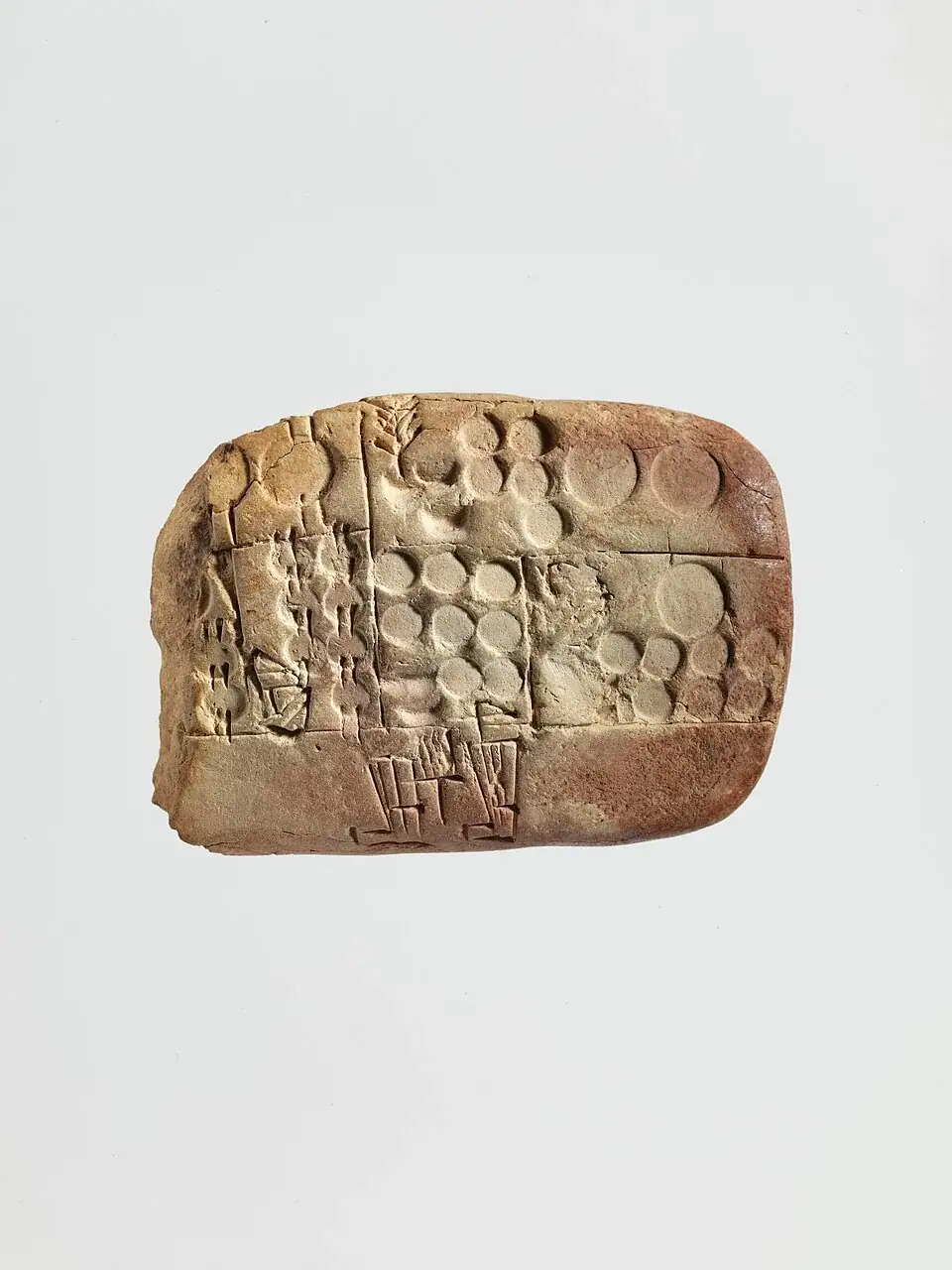
Tablet.The Metropolitan Museum of Art, c. 3100–2900 BCE · Wikimedia Commons · CC0 1.0 · CC0-1.0 - 08
Cuneiform matures: entering recorded history
In late Uruk Sumer, pictographs evolve into the cuneiform script system, ushering Mesopotamia into recorded history as one of the world's earliest writing systems.
Around 3000 BCE late Uruk pictographs evolved into the cuneiform system; Mesopotamia entered recorded history with one of the earliest writing systems.
Around 3000 BCE late Uruk pictographs evolved into the cuneiform system. Mesopotamia entered recorded history with one of the earliest writing systems.
“Mature” does not mean a complete record of the spoken language as we understand it today. It means the signs had become abstract and stable enough to be reused by different people, and that a record could express quantity, action and relation, not merely draw an object.
Recorded history begins here, but historical records were never neutral. Most surviving tablets come from temples, warehouses and palaces; ordinary people rarely enter the written record. The “earliest history” we read is largely the earliest administrative archive.
Sources: 8 event claims, 8 sourced; source cards src-b3w-sumer-cities-04, src-b3w-sumer-cities-06 (background only).
SourcesHistory of Sumer — Wikipedia backgroundCuneiform — Wikipedia background
- 09
Gilgamesh: from king to epic
According to epic tradition, King Gilgamesh rules Uruk; his deeds and quest become the basis of the Epic of Gilgamesh.
Around 2700 BCE, according to epic tradition, Gilgamesh ruled Uruk; his campaigns and quest became the basis of the Epic of Gilgamesh. This is epic tradition, not a contemporary archive.
Around 2700 BCE, according to epic tradition, Gilgamesh ruled Uruk. His campaigns and quest became the basis of the Epic of Gilgamesh.
This is “history in memory”, not a contemporary archive. The epic turns a city king into a semi-divine hero and explores campaigns, friendship and the question of death. It cares not about administrative accounts but about kingship and heroic memory.
Place Gilgamesh back in the Sumerian line and another side of writing appears. Ledgers record how the city worked; epic records how the city imagined itself. Both come from the same written civilisation, but one faces the warehouse and the other the palace and temple.
Sources: 7 event claims, 7 sourced; source cards src-b3w-sumer-cities-05, src-b3w-sumer-cities-07 (background only).
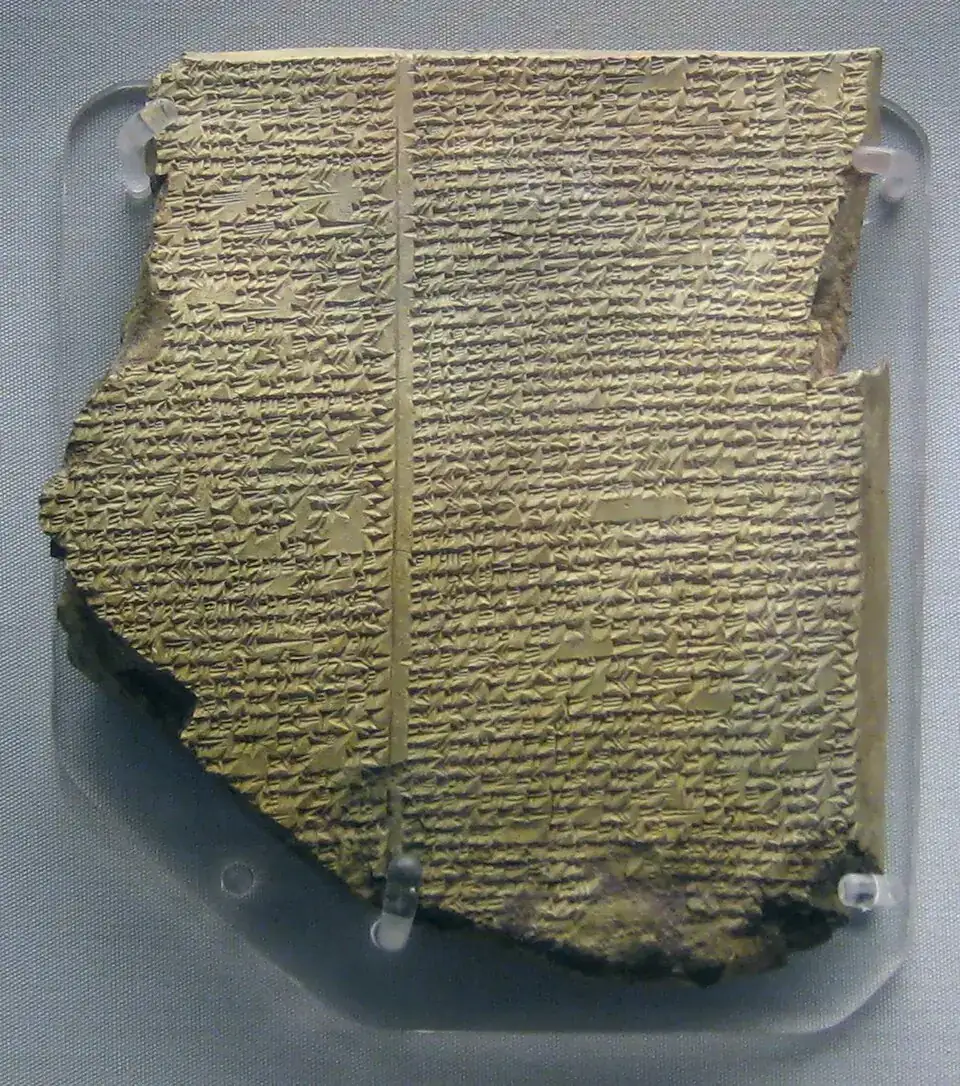
The flood narrative in the Gilgamesh story.BabelStone · Wikimedia Commons · CC0 1.0 · CC0-1.0 SourcesUruk — Wikipedia backgroundSargon of Akkad — Wikipedia background
- 10
Sargon: the end of the city-state order
Around 2334 BCE, Sargon of Akkad first served as a courtier to the king of Kish, then staged a coup to establish the Akkadian Empire. He defeated Lugalzagesi, conquered Sumerian city-states, and campaigned in Elam, Syria, and Anatolia. He created the first standing army and unified administrative divisions, called himself 'king of the four quarters', and was the first ruler in history to establish a multi-ethnic empi…
Around 2334 BCE Sargon, a courtier of the king of Kish, seized power, founded the Akkadian Empire, defeated Lugalzagesi, conquered the Sumerian city-states and campaigned in Elam, Syria and Anatolia.
Around 2334 BCE Sargon of Akkad, first a courtier of the king of Kish, staged a coup and founded the Akkadian Empire. He defeated Lugalzagesi, conquered the Sumerian city-states and campaigned in Elam, Syria and Anatolia.
The event record says Sargon created the first standing army and unified administrative divisions, called himself “king of the four quarters”, and was the first ruler to build a multi-ethnic empire. These “firsts” are the record's claims; this chapter repeats them without enlarging them.
Sargon's significance lies less in being more ruthless than a city king than in placing many city-states inside a higher military and administrative framework. The independent competition of the city-states was suppressed by imperial command; Sumerian urban civilisation did not end with city-state politics, but it now had to find a place inside an empire.
Sources: 5 event claims, 5 sourced; source cards src-b3w-sumer-cities-07, src-b3w-sumer-cities-03 (background only).
SourcesSargon of Akkad — Wikipedia backgroundSumerian King List — Wikipedia background
Cast
People whose choices move the story. Roles describe this story only.
- GilgameshKing of Uruk · epic tradition
Rules according to epic tradition; his campaigns and quest become the basis of the Epic of Gilgamesh, and he is not treated as a contemporary historical figure.
- SargonFounder of the Akkadian Empire
Around 2334 BCE stages a coup, defeats Lugalzagesi, conquers the Sumerian city-states, creates a standing army and unified administrative divisions, and calls himself king of the four quarters.
- LugalzagesiRival of the Sumerian city-states
The event record says he was defeated by Sargon; it does not expand his origins or achievements, and this chapter does not add them.
Evidence and limits
Chapter-level sources; key claims checked.
Source count is the number of distinct source records attached to the event nodes shown here. It does not certify the narrative as a whole.