
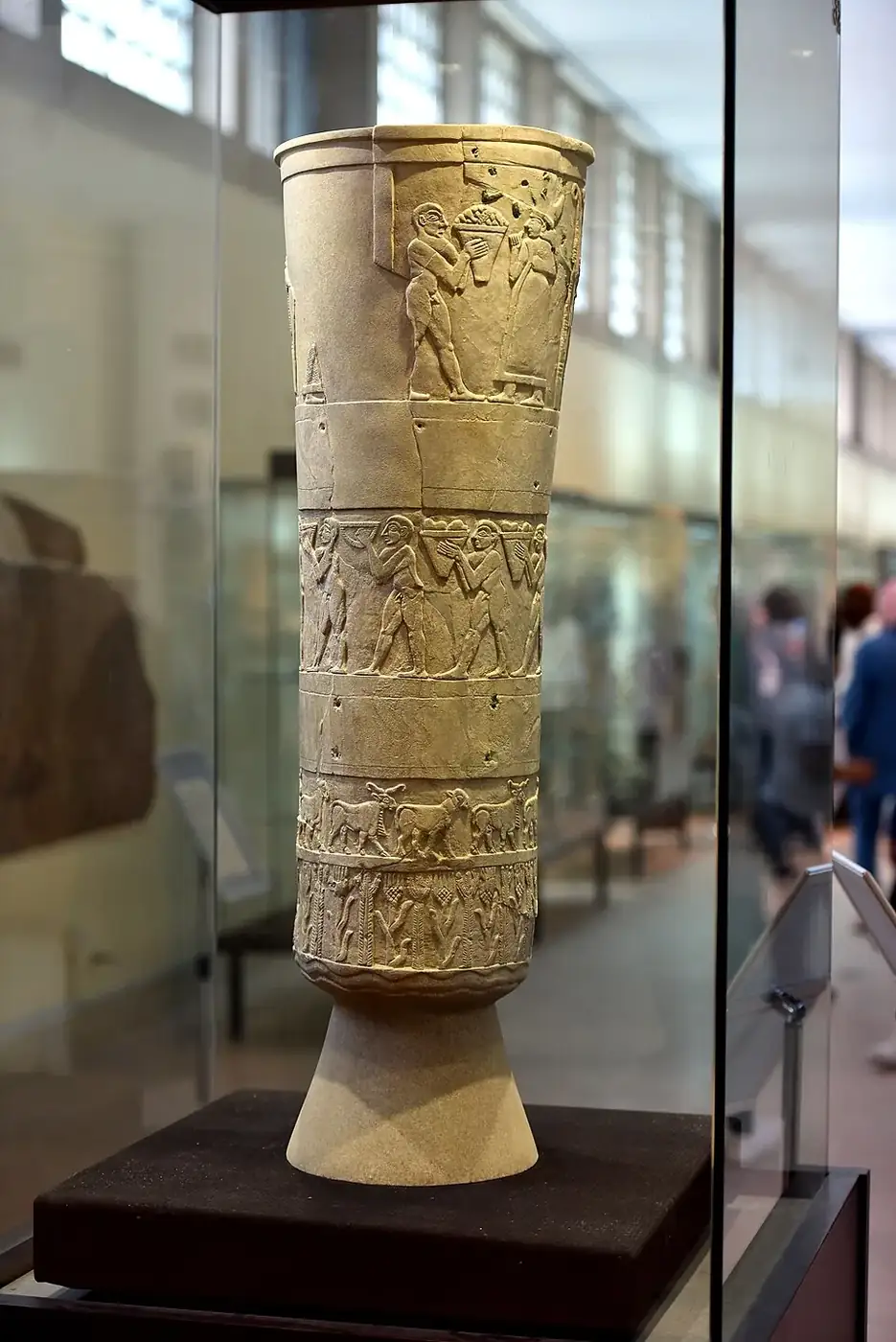
Around 3700 BCE, southern Mesopotamia was in the Uruk period (c. 4100–3100 BCE).1 Irrigation agriculture and canal trade supported a growing population4. The Uruk period saw large, stratified, temple-centred cities with over 10,000 people, where central administrations employed specialised workers.2 Uruk became the most urbanised city in the world during this period, surpassing 50,000 inhabitants for the first time.3 By the late 4th millennium BCE it was a true city and a prototype for the later Sumerian city-state system.5
Evidence ledger
5 claims5 sourced0 unsourced
Every hard fact in the narrative above is registered here. A claim may also record source-only details that the narrative does not repeat; the related-narrative line points to the corresponding passage, not a guarantee that the source supports every word of the body. A claim without a source stays visibly unsourced.
Around 3700 BCE, southern Mesopotamia was in the Uruk period (c. 4100–3100 BCE).
Related narrativeAround 3700 BCE, southern Mesopotamia was in the Uruk period (c. 4100–3100 BCE).
- Sumer — WikipediaWikipedia, "Sumer", Uruk period chronology
Uruk period: c. 4100 – c. 3100 BC
Accessed 2026-11-26 · machine excerpt · pending human review
L2: machine-extracted from the Wikipedia lead/full article and compared with the prose; not promoted to L3.
- Sumer — WikipediaWikipedia, "Sumer", Uruk period chronology
The Uruk period saw large, stratified, temple-centred cities with over 10,000 people, where central administrations employed specialised workers.
Related narrativeThe Uruk period saw large, stratified, temple-centred cities with over 10,000 people, where central administrations employed specialised workers.
- Sumer — WikipediaWikipedia, "Sumer", Uruk period
By the time of the Uruk period, c. 4100 – c. 2900 BC calibrated, the volume of trade goods transported along the canals and rivers of southern Mesopotamia facilitated the rise of many large, stratified, temple-centered cities, with populations of over 10,000 people, where centralized administrations employed specialized workers.
Accessed 2026-11-26 · machine excerpt · pending human review
L2: machine-extracted from the Wikipedia lead/full article and compared with the prose; not promoted to L3.
- Sumer — WikipediaWikipedia, "Sumer", Uruk period
Uruk became the most urbanised city in the world during this period, surpassing 50,000 inhabitants for the first time.
Related narrativeUruk became the most urbanised city in the world during this period, surpassing 50,000 inhabitants for the first time.
- Sumer — WikipediaWikipedia, "Sumer", Uruk period
During this period Uruk became the most urbanized city in the world, surpassing for the first time 50,000 inhabitants.
Accessed 2026-11-26 · machine excerpt · pending human review
L2: machine-extracted from the Wikipedia lead/full article and compared with the prose; not promoted to L3.
- Sumer — WikipediaWikipedia, "Sumer", Uruk period
Irrigation agriculture and canal trade supported a growing population.
Related narrativeIrrigation agriculture and canal trade supported a growing population
- Sumer — WikipediaWikipedia, "Sumer", sections on agriculture and the Uruk period
Sumerian farmers grew an abundance of grain and other crops, a surplus of which enabled them to form urban settlements. By the time of the Uruk period, the volume of trade goods transported along the canals and rivers of southern Mesopotamia facilitated the rise of many large, stratified, temple-centered cities.
Accessed 2026-11-26 · machine excerpt · pending human review
L2: machine-extracted from the Wikipedia lead/full article and compared with the prose; not promoted to L3.
- Sumer — WikipediaWikipedia, "Sumer", sections on agriculture and the Uruk period
By the late 4th millennium BCE it was a true city and a prototype for the later Sumerian city-state system.
Related narrativeBy the late 4th millennium BCE it was a true city and a prototype for the later Sumerian city-state system.
- Sumer — WikipediaWikipedia, "Sumer", sections on agriculture and the Uruk period
In the late 4th millennium BC, Sumer was divided into many independent city-states, which were divided by canals and boundary stones. During this period Uruk became the most urbanized city in the world, surpassing for the first time 50,000 inhabitants.
Accessed 2026-11-26 · machine excerpt · pending human review
L2: machine-extracted from the Wikipedia lead/full article and compared with the prose; not promoted to L3.
- Sumer — WikipediaWikipedia, "Sumer", sections on agriculture and the Uruk period
Sources and review
Key claims rely on a single source record
- Sumer — Wikipedia · Wikipedia contributors · Wikipedia lead and full article (accessed 2026-11-26) Original source ↗
L2 claims and source binding
L2 machine extraction plus manual comparison; no L3 two-source human confirmation.
Locations
- Mesopotamia· 31.3, 45.6· Approximate
evt-6043fe974e4bf88cSource file:
events/evt-6043fe974e4bf88c/event.md