
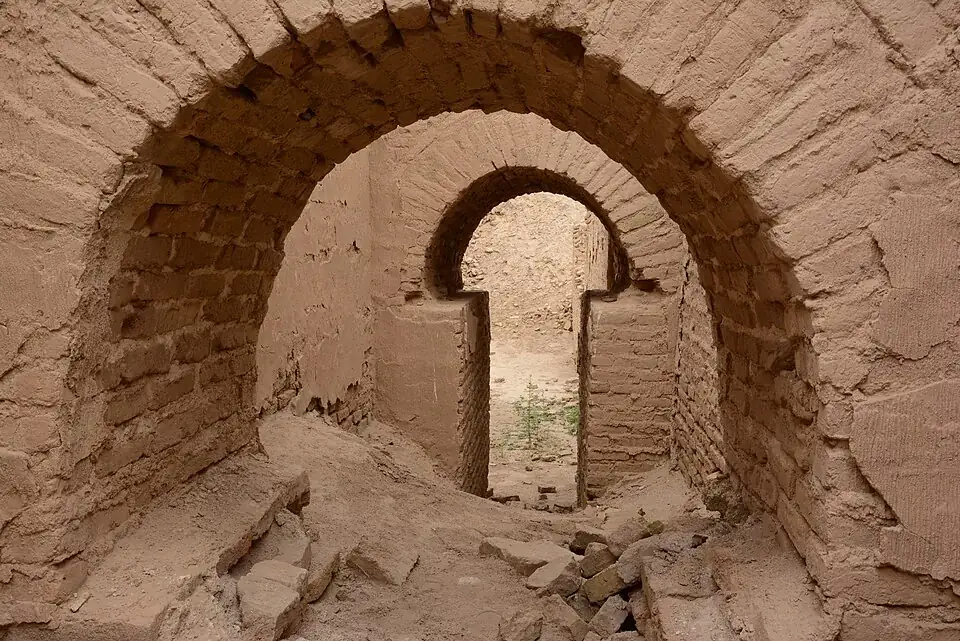
Around 4000 BCE, southern Mesopotamia entered the Uruk period.1 Uruk grew into the largest settlement in the region, and by about 3200 BCE it had become a true city, with monumental mud-brick buildings decorated with mosaics of painted clay cones.2 The city organised production and distribution around its temple, and the regularisation of management produced specialised records and archives.3 Crowding brought walls, occupational division and regional exchange.4 Uruk's growth shows that a city was not only a place of residence but also a centre for coordinating power, belief and the economy.5 Its scale and ceremonial core made it a model for later Mesopotamian urban life.6 The city thus became a node where density, ritual and administration reinforced one another.7 Its example remained visible in later Mesopotamian cities.8
Evidence ledger
8 claims7 sourced0 unsourced1 author judgment
Every hard fact in the narrative above is registered here. A claim may also record source-only details that the narrative does not repeat; the related-narrative line points to the corresponding passage, not a guarantee that the source supports every word of the body. A claim without a source stays visibly unsourced.
Around 4000 BCE, southern Mesopotamia entered the Uruk period.
Related narrativeAround 4000 BCE, southern Mesopotamia entered the Uruk period.
- Eridu — WikipediaWikipedia, "Eridu", full article, evidence sentence 3
Eridu is traditionally considered the earliest city in southern Mesopotamia based on the Sumerian King List.
Accessed 2026-11-26 · machine excerpt · pending human review
L2: machine-extracted from the Wikipedia lead/full article and compared with the prose; not promoted to L3.
- Eridu — WikipediaWikipedia, "Eridu", full article, evidence sentence 3
Uruk grew into the largest settlement in the region, and by about 3200 BCE it had become a true city, with monumental mud-brick buildings decorated with mosaics of painted clay cones.
Related narrativeUruk grew into the largest settlement in the region, and by about 3200 BCE it had become a true city, with monumental mud-brick buildings decorated with mosaics of painted clay cones.
- Eridu — WikipediaWikipedia, "Eridu", full article, evidence sentence 58
His consort Ninhursag had a nearby temple at Ubaid.
Accessed 2026-11-26 · machine excerpt · pending human review
L2: machine-extracted from the Wikipedia lead/full article and compared with the prose; not promoted to L3.
- Eridu — WikipediaWikipedia, "Eridu", full article, evidence sentence 58
The city organised production and distribution around its temple, and the regularisation of management produced specialised records and archives.
Related narrativeThe city organised production and distribution around its temple, and the regularisation of management produced specialised records and archives.
Editorial judgment, not a historical fact.
Author judgment; no source binding.
Crowding brought walls, occupational division and regional exchange.
Related narrativeCrowding brought walls, occupational division and regional exchange.
- Eridu — WikipediaWikipedia, "Eridu", full article, evidence sentence 64
Aside from Enmerkar of Uruk (as mentioned in the Aratta epics), several later historical Sumerian kings are said in inscriptions found here to have ordered improvement or re-building works on the e-abzu temple, including Elili of Ur; Ur-Nammu, Shulgi and Amar-Sin of Ur-III, and Nur-Adad of Larsa.
Accessed 2026-11-26 · machine excerpt · pending human review
L2: machine-extracted from the Wikipedia lead/full article and compared with the prose; not promoted to L3.
- Eridu — WikipediaWikipedia, "Eridu", full article, evidence sentence 64
Uruk's growth shows that a city was not only a place of residence but also a centre for coordinating power, belief and the economy.
Related narrativeUruk's growth shows that a city was not only a place of residence but also a centre for coordinating power, belief and the economy.
- Eridu — WikipediaWikipedia, "Eridu", full article, evidence sentence 114
At first Enki, the god of Eridu, attempted to retrieve these sources of his power but later willingly accepted that Uruk now was the centre of the land.
Accessed 2026-11-26 · machine excerpt · pending human review
L2: machine-extracted from the Wikipedia lead/full article and compared with the prose; not promoted to L3.
- Eridu — WikipediaWikipedia, "Eridu", full article, evidence sentence 114
Its scale and ceremonial core made it a model for later Mesopotamian urban life.
Related narrativeIts scale and ceremonial core made it a model for later Mesopotamian urban life.
- Eridu — WikipediaWikipedia, "Eridu", full article, evidence sentence 64
Aside from Enmerkar of Uruk (as mentioned in the Aratta epics), several later historical Sumerian kings are said in inscriptions found here to have ordered improvement or re-building works on the e-abzu temple, including Elili of Ur; Ur-Nammu, Shulgi and Amar-Sin of Ur-III, and Nur-Adad of Larsa.
Accessed 2026-11-26 · machine excerpt · pending human review
L2: machine-extracted from the Wikipedia lead/full article and compared with the prose; not promoted to L3.
- Eridu — WikipediaWikipedia, "Eridu", full article, evidence sentence 64
The city thus became a node where density, ritual and administration reinforced one another.
Related narrativeThe city thus became a node where density, ritual and administration reinforced one another.
- Eridu — WikipediaWikipedia, "Eridu", full article, evidence sentence 9
One of the religious quarters of Babylon, containing the temple called the Esagila as well as the temple of Annunitum, among others, was also named Eridu.
Accessed 2026-11-26 · machine excerpt · pending human review
L2: machine-extracted from the Wikipedia lead/full article and compared with the prose; not promoted to L3.
- Eridu — WikipediaWikipedia, "Eridu", full article, evidence sentence 9
Its example remained visible in later Mesopotamian cities.
Related narrativeIts example remained visible in later Mesopotamian cities.
- Eridu — WikipediaWikipedia, "Eridu", full article, evidence sentence 64
Aside from Enmerkar of Uruk (as mentioned in the Aratta epics), several later historical Sumerian kings are said in inscriptions found here to have ordered improvement or re-building works on the e-abzu temple, including Elili of Ur; Ur-Nammu, Shulgi and Amar-Sin of Ur-III, and Nur-Adad of Larsa.
Accessed 2026-11-26 · machine excerpt · pending human review
L2: machine-extracted from the Wikipedia lead/full article and compared with the prose; not promoted to L3.
- Eridu — WikipediaWikipedia, "Eridu", full article, evidence sentence 64
Sources and review
Key claims rely on a single source record
- Eridu — Wikipedia · Wikipedia contributors · Wikipedia lead and full article (accessed 2026-11-26) Original source ↗
- Sumer — Wikipedia · Wikipedia contributors · Wikipedia lead and full article (accessed 2026-11-26) Original source ↗
L2 claims and source binding
L2 machine extraction plus manual comparison; no L3 two-source human confirmation.
Locations
- Mesopotamia· 31.32, 45.64· Approximate
evt-7f6b375cd52419b0Source file:
events/evt-7f6b375cd52419b0/event.md