
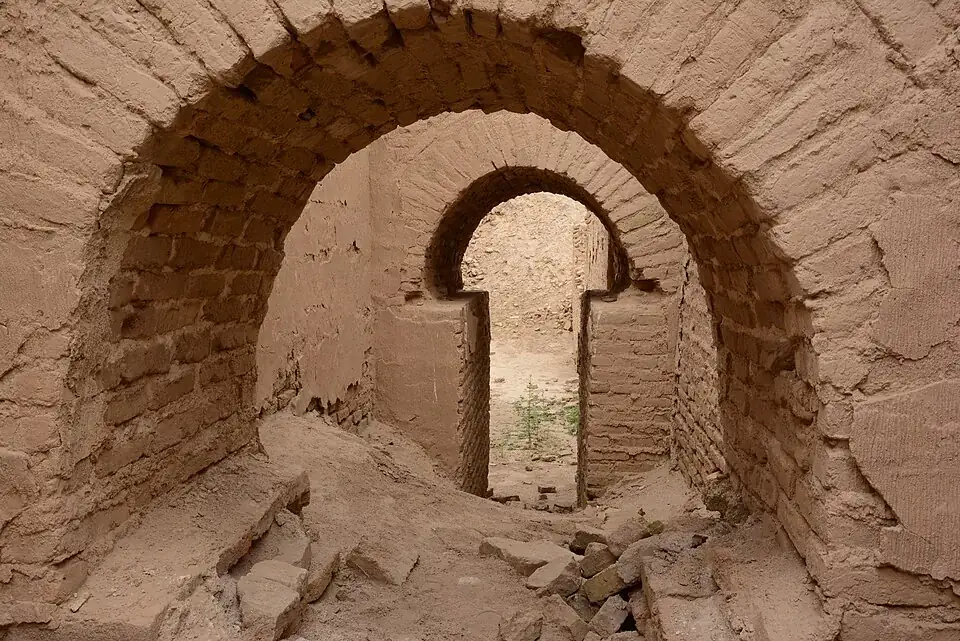
Uruk, in southern Mesopotamia, developed during the Uruk period, roughly 4000–3100 BCE.1 By around 3200 BCE it was the largest settlement in southern Mesopotamia, with monumental mud-brick buildings decorated with mosaics of painted clay cones.2 Large-scale sculpture in the round, relief carving and lost-wax metal casting appeared in this period.3 Simple pictographs were drawn on clay tablets to record goods management and workers’ rations; these pictographs are the precursors of later cuneiform writing.4 Until around 3000 BCE, objects inspired by Mesopotamia were found from central Iran to the Egyptian Nile Delta.5
Evidence ledger
5 claims5 sourced0 unsourced
Every hard fact in the narrative above is registered here. A claim may also record source-only details that the narrative does not repeat; the related-narrative line points to the corresponding passage, not a guarantee that the source supports every word of the body. A claim without a source stays visibly unsourced.
Uruk, in southern Mesopotamia, developed during the Uruk period, roughly 4000–3100 BCE.
Related narrativeUruk, in southern Mesopotamia, developed during the Uruk period, roughly 4000–3100 BCE.
- Sumer — WikipediaWikipedia, "Sumer", full article, evidence sentence 8
combine proto-cuneiform characters and illustrations of early Sumerians, Jemdet Nasr period, 3100–2700 BC.
Accessed 2026-11-26 · machine excerpt · pending human review
L2: machine-extracted from the Wikipedia lead/full article and compared with the prose; not promoted to L3.
- Sumer — WikipediaWikipedia, "Sumer", full article, evidence sentence 8
By around 3200 BCE it was the largest settlement in southern Mesopotamia, with monumental mud-brick buildings decorated with mosaics of painted clay cones.
Related narrativeBy around 3200 BCE it was the largest settlement in southern Mesopotamia, with monumental mud-brick buildings decorated with mosaics of painted clay cones.
- History of Sumer — WikipediaWikipedia, "History of Sumer", full article, evidence sentence 4
The transition to urbanism in Mesopotamia was the culmination of the Neolithic Revolution, a transformative process beginning around 10,000 BCE across the broader Fertile Crescent.
Accessed 2026-11-26 · machine excerpt · pending human review
L2: machine-extracted from the Wikipedia lead/full article and compared with the prose; not promoted to L3.
- History of Sumer — WikipediaWikipedia, "History of Sumer", full article, evidence sentence 4
Large-scale sculpture in the round, relief carving and lost-wax metal casting appeared in this period.
Related narrativeLarge-scale sculpture in the round, relief carving and lost-wax metal casting appeared in this period.
- History of Sumer — WikipediaWikipedia, "History of Sumer", lead section
The history of Sumer spans the late fifth to the third millennium BC in southern Mesopotamia, documenting the world's first transition from Neolithic village life to a complex urban civilization.
Accessed 2026-11-26 · machine excerpt · pending human review
L2: machine-extracted from the Wikipedia lead/full article and compared with the prose; not promoted to L3.
- History of Sumer — WikipediaWikipedia, "History of Sumer", lead section
Simple pictographs were drawn on clay tablets to record goods management and workers’ rations; these pictographs are the precursors of later cuneiform writing.
Related narrativeSimple pictographs were drawn on clay tablets to record goods management and workers’ rations; these pictographs are the precursors of later cuneiform writing.
- History of Sumer — WikipediaWikipedia, "History of Sumer", full article, evidence sentence 66
The process began with the use of clay tokens, which represented specific quantities of goods like barley or sheep.
Accessed 2026-11-26 · machine excerpt · pending human review
L2: machine-extracted from the Wikipedia lead/full article and compared with the prose; not promoted to L3.
- History of Sumer — WikipediaWikipedia, "History of Sumer", full article, evidence sentence 66
Until around 3000 BCE, objects inspired by Mesopotamia were found from central Iran to the Egyptian Nile Delta.
Related narrativeUntil around 3000 BCE, objects inspired by Mesopotamia were found from central Iran to the Egyptian Nile Delta.
- History of Sumer — WikipediaWikipedia, "History of Sumer", full article, evidence sentence 4
The transition to urbanism in Mesopotamia was the culmination of the Neolithic Revolution, a transformative process beginning around 10,000 BCE across the broader Fertile Crescent.
Accessed 2026-11-26 · machine excerpt · pending human review
L2: machine-extracted from the Wikipedia lead/full article and compared with the prose; not promoted to L3.
- History of Sumer — WikipediaWikipedia, "History of Sumer", full article, evidence sentence 4
Sources and review
Cross-check · 2026-11-08 · Both sources place Uruk's urban development within the Uruk period (c. 4000–3100 BCE) and separately support the appearance of monumental buildings and administrative records. The body adds no claim beyond these two records.
- History of Sumer — Wikipedia · Wikipedia contributors · Wikipedia lead and full article (accessed 2026-11-26) Original source ↗
- Sumer — Wikipedia · Wikipedia contributors · Wikipedia lead and full article (accessed 2026-11-26) Original source ↗
L2 claims and source binding
L2 machine extraction plus manual comparison; no L3 two-source human confirmation.
Locations
- Mesopotamia· 31.3, 45.6· Approximate
evt-12038ddb8bc443b1Source file:
events/evt-12038ddb8bc443b1/event.md