
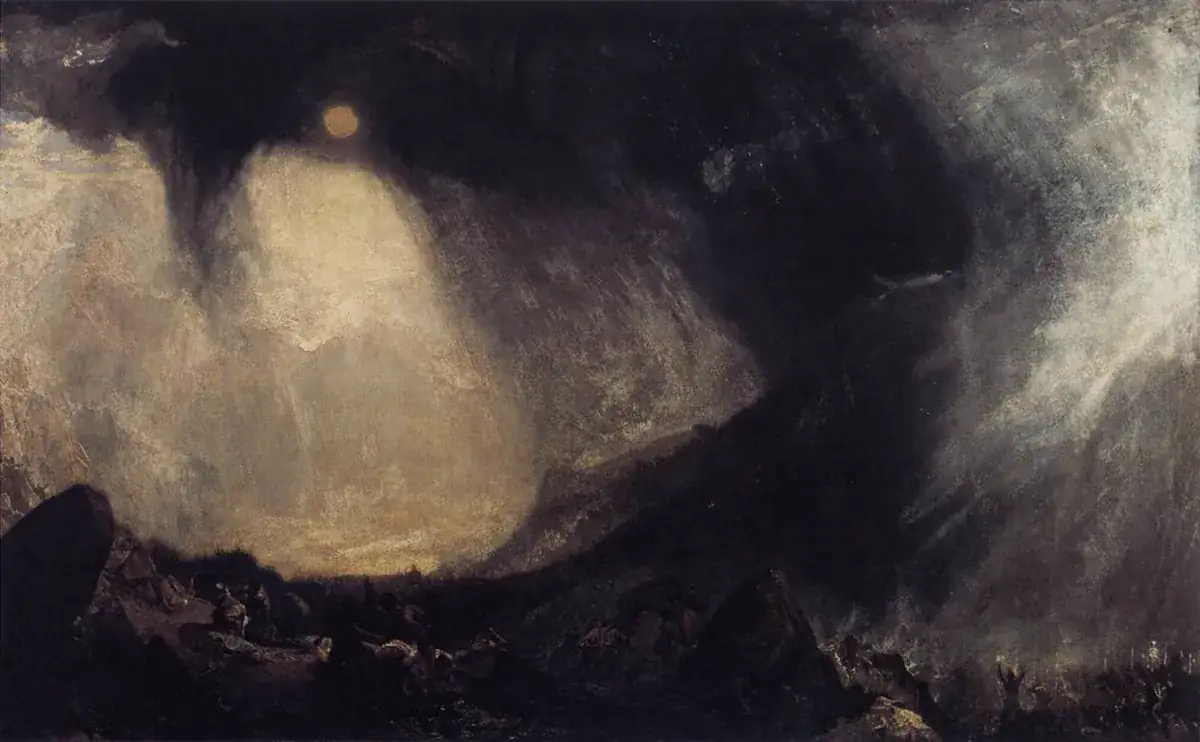
In spring 218 BCE Hannibal set out from Cartagena in Spain; the whole journey from Cartagena took five months.1
The Alpine crossing itself took 15 days; when he descended into Italy he had about 25,000 infantry, 6,000 cavalry and most of his original 37 elephants.2
Where the pass lay was never fixed by the ancient authors. Polybius and later Livy did not name it clearly; modern candidates include Montgenèvre, the Little St. Bernard, Mount Cenis, and the higher Col du Clapier–Savine Coche and Col de la Traversette.3
Once in Italy, Hannibal won successively at the Ticino, the Trebbia (December 218 BCE) and Lake Trasimene (June 217 BCE); in 216 BCE he destroyed a large Roman army at Cannae. He never marched on Rome itself.4
The Second Punic War ran from 218 to 201 BCE; although Hannibal won repeated battles in Italy, Rome ultimately prevailed and seized Carthage's territories in Spain.5 Hannibal was defeated by Scipio at Zama in 202 BCE, later went into exile, and died about 183–181 BCE.6
Crossing the Alps was a logistical feat, not a strategic end point. Hannibal could win battles but could not break Rome's alliance system; the closer he came to Rome, the narrower his supply and political space became.7
Evidence ledger
7 claims6 sourced0 unsourced1 author judgment
Every hard fact in the narrative above is registered here. A claim may also record source-only details that the narrative does not repeat; the related-narrative line points to the corresponding passage, not a guarantee that the source supports every word of the body. A claim without a source stays visibly unsourced.
- Hannibal — The Alpine crossingBritannica, Hannibal, The Alpine crossing; Hannibal, main entry
Finally, on the 15th day, after a journey of five months from Cartagena … Hannibal descended into Italy. … Hannibal spent the winter of 219–218 at Cartagena in active preparations for carrying the war into Italy.
Accessed 2026-11-25 · human read
Says five months and departure from Cartagena; no 'miraculous winter crossing'.
- Hannibal — The Alpine crossingBritannica, Hannibal, The Alpine crossing; Hannibal, main entry
The Alpine crossing itself took 15 days; when he descended into Italy he had about 25,000 infantry, 6,000 cavalry and most of his original 37 elephants.
Related narrativeThe Alpine crossing itself took 15 days; when he descended into Italy he had about 25,000 infantry, 6,000 cavalry and most of his original 37 elephants.
- Hannibal — The Alpine crossingBritannica, Hannibal, The Alpine crossing, final paragraph
Finally, on the 15th day, after a journey of five months from Cartagena, with 25,000 infantry, 6,000 cavalry, and most of his original 37 elephants, Hannibal descended into Italy.
Accessed 2026-11-25 · human read
Says the post-crossing army and elephants; no '60,000 troops'.
- Hannibal — The Alpine crossingBritannica, Hannibal, The Alpine crossing, final paragraph
Where the pass lay was never fixed by the ancient authors. Polybius and later Livy did not name it clearly; modern candidates include Montgenèvre, the Little St. Bernard, Mount Cenis, and the higher Col du Clapier–Savine Coche and Col de la Traversette.
Related narrativeWhere the pass lay was never fixed by the ancient authors. Polybius and later Livy did not name it clearly; modern candidates include Montgenèvre, the Little St. Bernard, Mount Cenis, and the higher Col du Clapier–Savine Coche and Col de la Traversette.
- Hannibal — The Alpine crossingBritannica, Hannibal, The Alpine crossing, pass discussion
The name of the pass was either not known to Polybius and his sources or it was thought not sufficiently important to provide to mostly Roman readers. … Proposed routes have included the low passes at Montgenèvre, Little St. Bernard, and Mount Cenis, as well as the high passes at Col du Clapier–Savine Coche and Col de la Traversette.
Accessed 2026-11-25 · human read
Lists candidates without choosing one; no claim that Hannibal used the Little St. Bernard.
- Hannibal — The Alpine crossingBritannica, Hannibal, The Alpine crossing, pass discussion
Once in Italy, Hannibal won successively at the Ticino, the Trebbia (December 218 BCE) and Lake Trasimene (June 217 BCE); in 216 BCE he destroyed a large Roman army at Cannae. He never marched on Rome itself.
Related narrativeOnce in Italy, Hannibal won successively at the Ticino, the Trebbia (December 218 BCE) and Lake Trasimene (June 217 BCE); in 216 BCE he destroyed a large Roman army at Cannae. He never marched on Rome itself.
- Hannibal — The Alpine crossingBritannica, Hannibal, The Alpine crossing and The war in Italy
… Hannibal successfully goaded the army of Sempronius Longus into battle on the left bank of the Trebbia River south of Placentia (December 218). … in 217 … Hannibal’s troops all but annihilated the Roman army … Hannibal, however, did not march on Rome but spent the winter of 216–215 in Capua.
Accessed 2026-11-25 · human read
Battle sequence follows the entry; no claim that Hannibal captured Rome.
- Hannibal — The Alpine crossingBritannica, Hannibal, The Alpine crossing and The war in Italy
The Second Punic War ran from 218 to 201 BCE; although Hannibal won repeated battles in Italy, Rome ultimately prevailed and seized Carthage's territories in Spain.
Related narrativeThe Second Punic War ran from 218 to 201 BCE; although Hannibal won repeated battles in Italy, Rome ultimately prevailed and seized Carthage's territories in Spain.
- Punic WarsBritannica, Punic Wars, Top Questions
The Second Punic War (218–201 BCE) is famous for Hannibal’s invasion of Italy. Despite initial Carthaginian victories, Rome ultimately prevailed, gaining control of Carthaginian territories in Spain.
Accessed 2026-11-25 · human read
War dates and outcome; no claim that Hannibal won the war.
- Punic WarsBritannica, Punic Wars, Top Questions
Hannibal was defeated by Scipio at Zama in 202 BCE, later went into exile, and died about 183–181 BCE.
Related narrativeHannibal was defeated by Scipio at Zama in 202 BCE, later went into exile, and died about 183–181 BCE.
- Hannibal — The Alpine crossingBritannica, Hannibal, main entry, Zama paragraph and Quick Facts
Hannibal was eventually called back to Africa in 203 BCE, where he was defeated by Scipio Africanus at the Battle of Zama in 202 BCE, ending the war. … Hannibal (born 247 BCE, North Africa—died c. 183–181 BCE, Libyssa, Bithynia [near Gebze, Turkey]).
Accessed 2026-11-25 · human read
Says defeat at Zama, exile and a date range for death; no claim that Hannibal died in Rome.
- Hannibal — The Alpine crossingBritannica, Hannibal, main entry, Zama paragraph and Quick Facts
Crossing the Alps was a logistical feat, not a strategic end point. Hannibal could win battles but could not break Rome's alliance system; the closer he came to Rome, the narrower his supply and political space became.
Related narrativeCrossing the Alps was a logistical feat, not a strategic end point. Hannibal could win battles but could not break Rome's alliance system; the closer he came to Rome, the narrower his supply and political space became.
Editorial judgment, not a historical fact.
Author judgment: places the crossing back into strategy and logistics.
Sources and review
- Hannibal — The Alpine crossing · Encyclopaedia Britannica (accessed 2026-11-25) Original source ↗
- Punic Wars · Encyclopaedia Britannica (accessed 2026-11-25) Original source ↗
Locations
- Italy· 45.2, 7· Approximate
evt-7f6d569d935a70e6Source file:
events/evt-7f6d569d935a70e6/event.md