
710年,日本把首都迁到平城京(奈良)。1
这是第一座常驻首都,城市布局仿唐长安;奈良时代延续到784年,汉化与佛教在这里同时达到高点。2
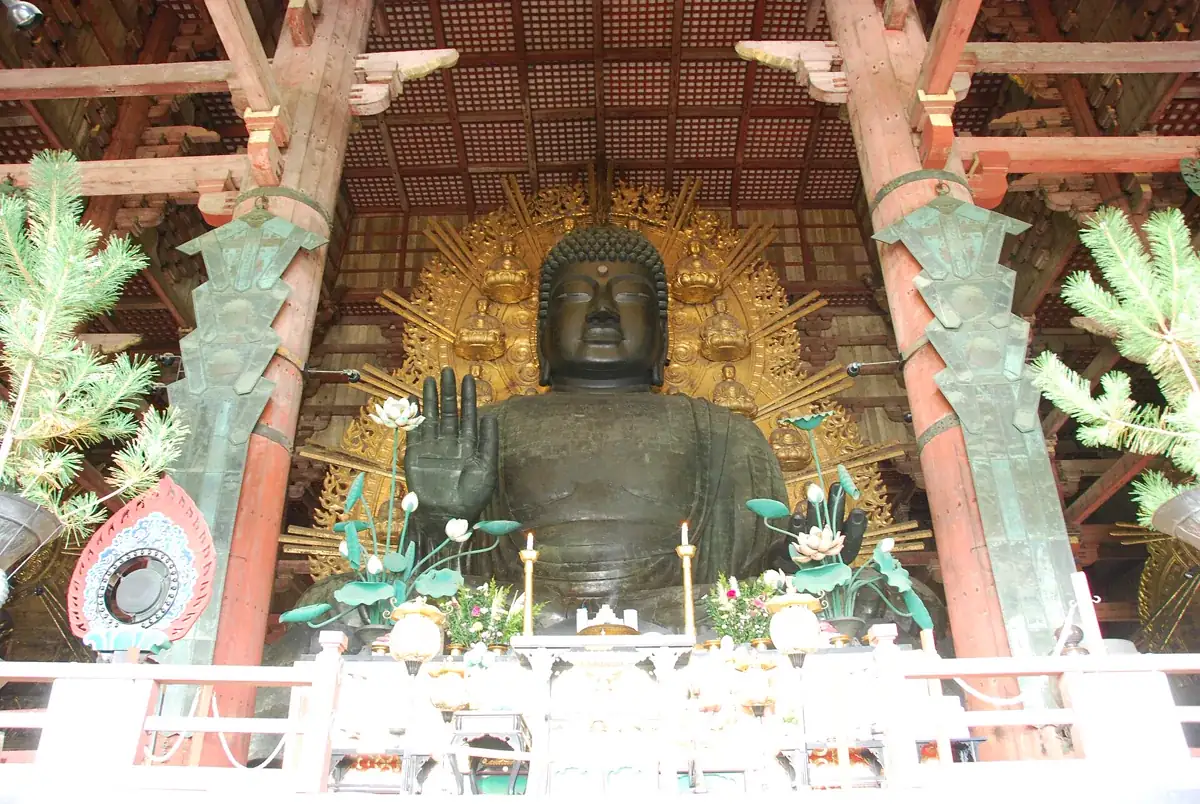
741年,圣武天皇在各国建立国分寺与国分尼寺,把地方寺院纳入以奈良为中心的体系;743年又发起建造东大寺与卢舍那大佛。3
大佛殿745年开工,752年举行开眼供养,坐佛高近15米。4
奈良的中央政府设太政官与诸省,另设神祇官;天皇称“天皇”,既是官僚体系顶点,也是神祇祭祀的中心。5
宗教不是国家的私事,而是国家工程的一部分。6
证据台账
6 条断言5 有来源0 无来源1 作者判断
正文中的每项硬事实在此逐条登记。断言可能补充正文未复述的来源细节;“正文相关句”只是对应段落,不等于来源支持该段全部表述。没有来源的断言保持“无来源”标记。
710年,日本把首都迁到平城京(奈良)。
正文相关句710年,日本把首都迁到平城京(奈良)。
- 奈良时代Opening: Nara period 710–784; first permanent capital
Nara period, (ad 710–784), in Japanese history, period in which the imperial government was at Nara, and Sinicization and Buddhism were most highly developed. Nara, the country’s first permanent capital, was modeled on the Chinese T’ang dynasty (618–907) capital, Ch’ang-an.
访问于 2026-11-25 · 人工阅读
- 奈良时代Opening: Nara period 710–784; first permanent capital
这是第一座常驻首都,城市布局仿唐长安;奈良时代延续到784年,汉化与佛教在这里同时达到高点。
正文相关句这是第一座常驻首都,城市布局仿唐长安;奈良时代延续到784年,汉化与佛教在这里同时达到高点。
- 奈良时代Opening: first permanent capital; Sinicization and Buddhism
Nara period, (ad 710–784), in Japanese history, period in which the imperial government was at Nara, and Sinicization and Buddhism were most highly developed. Nara, the country’s first permanent capital, was modeled on the Chinese T’ang dynasty (618–907) capital, Ch’ang-an.
访问于 2026-11-25 · 人工阅读
- 奈良时代Opening: first permanent capital; Sinicization and Buddhism
741年,圣武天皇在各国建立国分寺与国分尼寺,把地方寺院纳入以奈良为中心的体系;743年又发起建造东大寺与卢舍那大佛。
正文相关句741年,圣武天皇在各国建立国分寺与国分尼寺,把地方寺院纳入以奈良为中心的体系;743年又发起建造东大寺与卢舍那大佛。
- 日本建筑:东大寺与奈良时代Nara period: kokubunji system and Tōdai-ji
In 741 he established the kokubunji system, building a monastery and a nunnery in each province, all under a central authority at Nara. In 743 he initiated the planning for construction of that central authority—the Tōdai Temple—and of its central image, a massive bronze statue of the Birushana (Vairocana) Buddha, known as the Great Buddha (Daibutsu).
访问于 2026-11-25 · 人工阅读
- 日本建筑:东大寺与奈良时代Nara period: kokubunji system and Tōdai-ji
大佛殿745年开工,752年举行开眼供养,坐佛高近15米。
正文相关句大佛殿745年开工,752年举行开眼供养,坐佛高近15米。
- 日本建筑:东大寺与奈良时代Great Buddha Hall: construction in 745, dedication in 752, height
The construction of the Great Buddha Hall (Daibutsuden) commenced in 745, and dedication ceremonies for the nearly 15-metre- (50-foot-) high seated figure were held in 752.
访问于 2026-11-25 · 人工阅读
- 日本建筑:东大寺与奈良时代Great Buddha Hall: construction in 745, dedication in 752, height
奈良的中央政府设太政官与诸省,另设神祇官;天皇称“天皇”,既是官僚体系顶点,也是神祇祭祀的中心。
正文相关句奈良的中央政府设太政官与诸省,另设神祇官;天皇称“天皇”,既是官僚体系顶点,也是神祇祭祀的中心。
- 奈良时代Government: Council of State, ministries, Office of Deities, tennō
With the adoption of the imperial title tennō, translated from the Chinese t’ien-huang, or “heavenly emperor,” the Chinese concept of the emperor as the supreme symbol of central government rule was incorporated into the native Japanese interpretation of the emperor as also the leading Shintō cult figure. Like its T’ang Chinese prototype, the Japanese central government consisted of a Council of State (Dajōkan) and ministries of Rites, Personnel, Public Works, War, Justice and Revenue. An Office of Deities (Jingikan) supervised Shintō official ceremonies.
访问于 2026-11-25 · 人工阅读
- 奈良时代Government: Council of State, ministries, Office of Deities, tennō
宗教不是国家的私事,而是国家工程的一部分。
正文相关句宗教不是国家的私事,而是国家工程的一部分。
这是编辑判断,不作为史实。
来源与核验
地点
- 日本· 34.7, 135.8· 近似
evt-dd1fbee8ad67a6b4源文件:
events/evt-dd1fbee8ad67a6b4/event.md