
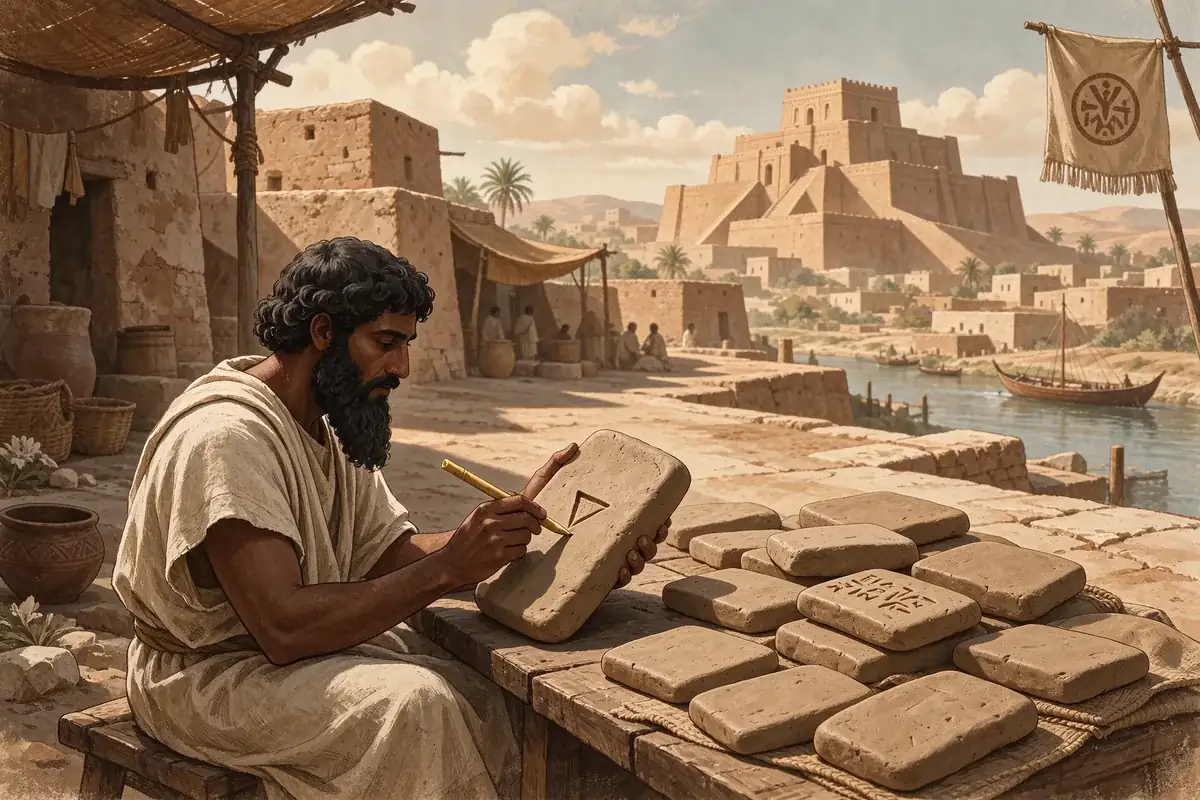
Tablet 2012.044.008 in Emory University’s Michael C.1,7 Carlos Museum dates to about 3200 BCE and belongs to the late Uruk period.1 It carries an administrative text in proto-cuneiform.2 This object alone cannot establish a unique place or an exact year for the invention of writing.3 Placing “Late-Uruk proto-cuneiform records, c.4 3200 BCE” in 3200 BCE Asia, it connects earlier and later change in Culture.4
Clay tablet 2012.044.008 collected by the Michael C.5 Carlos Museum at Emory University is dated to about 3200 BCE and belongs to the late Uruk period.5 The clay tablets contain original cuneiform administrative records. From this collection alone, it is not possible to determine the unique place or precise year of the invention of writing. Putting the "original cuneiform records of late Uruk (about 3200 BCE)" back to Mesopotamia in 3200 BCE, it connects the changes in culture over a long period of time.6
Evidence ledger
7 claims2 sourced2 unsourced3 author judgment
Every hard fact in the narrative above is registered here. A claim may also record source-only details that the narrative does not repeat; the related-narrative line points to the corresponding passage, not a guarantee that the source supports every word of the body. A claim without a source stays visibly unsourced.
Tablet 2012.044.008 dates to about 3200 BCE and belongs to the late Uruk period.
Related narrativeTablet 2012.044.008 in Emory University’s Michael C. Carlos Museum dates to about 3200 BCE and belongs to the late Uruk period.
- Tablet with Proto-Cuneiform Administrative TextObject record: Date field
ca. 3200 BCE
Accessed 2026-11-09 · machine excerpt · pending human review - Tablet with Proto-Cuneiform Administrative TextObject record: Period field
late Uruk Period
Accessed 2026-11-09 · machine excerpt · pending human review
- Tablet with Proto-Cuneiform Administrative TextObject record: Date field
The tablet carries an administrative text in proto-cuneiform.
Related narrativeIt carries an administrative text in proto-cuneiform.
- Tablet with Proto-Cuneiform Administrative TextObject title
Tablet with Proto-Cuneiform Administrative Text
Accessed 2026-11-09 · machine excerpt · pending human review
- Tablet with Proto-Cuneiform Administrative TextObject title
This object alone cannot establish a unique place or an exact year for the invention of writing.
Related narrativeThis object alone cannot establish a unique place or an exact year for the invention of writing.
Editorial judgment, not a historical fact.
Placing “Late-Uruk proto-cuneiform records, c. 3200 BCE” in 3200 BCE Asia, it connects earlier and later change in Culture.
Related narrativePlacing “Late-Uruk proto-cuneiform records, c. 3200 BCE” in 3200 BCE Asia, it connects earlier and later change in Culture.
Editorial judgment, not a historical fact.
Context sentence; does not replace the sourced claims
Clay tablet 2012.044.008 collected by the Michael C.
Related narrativeClay tablet 2012.044.008 collected by the Michael C.
Editorial judgment, not a historical fact.
Editorial context; not a sourced factual claim.
Putting the "original cuneiform records of late Uruk (about 3200 BCE)" back to Mesopotamia in 3200 BCE, it connects the changes in culture over a long period of time.
Related narrativePutting the "original cuneiform records of late Uruk (about 3200 BCE)" back to Mesopotamia in 3200 BCE, it connects the changes in culture over a long period of time.
No source registered. This assertion remains unverified.
Tablet 2012.044.008 in Emory University’s Michael C.
Related narrativeTablet 2012.044.008 in Emory University’s Michael C.
No source registered. This assertion remains unverified.
Sources and review
2 key claims have no binding source; Unsourced key claims keep the event at structure level
- Tablet with Proto-Cuneiform Administrative Text · Emory University, Michael C. Carlos Museum (accessed 2026-11-04) Original source ↗
- Mesopotamia school visit resource · The British Museum (accessed 2026-11-04) Original source ↗
Title, dating qualifiers and rewritten body compared with the cited institutional records.
AI-assisted source comparison, not external expert certification. Legacy map coordinates, other events and whole-topic verification are outside this review scope.
Locations
- Mesopotamia· 31.3, 45.6· Approximate
evt-8eb622f44a314606Source file:
events/evt-8eb622f44a314606/event.md