
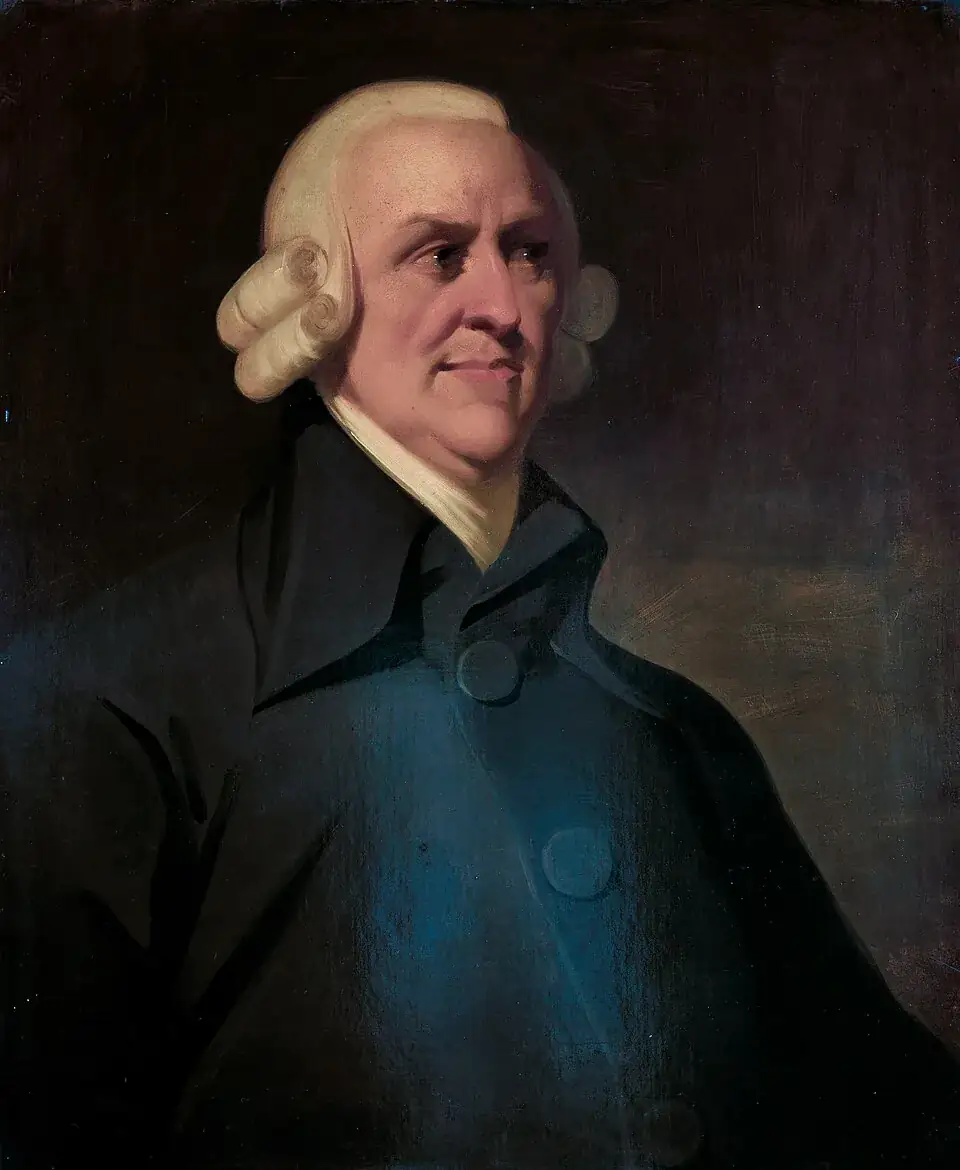
Scottish economist Adam Smith publishes An Inquiry into the Nature and Causes of the Wealth of Nations (commonly The Wealth of Nations) in London.1 Smith puts forward the 'invisible hand' principle: individuals pursuing their own self-interest inadvertently promote the public interest; free trade promotes economic growth more effectively than government regulation; division of labor is the source of increasing wealth.2 The book is a foundational work of classical political economy, profoundly influencing later economic thought and policy, advocating laissez-faire.3
Evidence ledger
3 claims0 sourced3 unsourced
Every hard fact in the narrative above is registered here. A claim may also record source-only details that the narrative does not repeat; the related-narrative line points to the corresponding passage, not a guarantee that the source supports every word of the body. A claim without a source stays visibly unsourced.
No source registered. This assertion remains unverified.
Bulk context rewrite; sources pending
Smith puts forward the 'invisible hand' principle: individuals pursuing their own self-interest inadvertently promote the public interest; free trade promotes economic growth more effectively than government regulation; division of labor is the source of increasing wealth.
Related narrativeSmith puts forward the 'invisible hand' principle: individuals pursuing their own self-interest inadvertently promote the public interest; free trade promotes economic growth more effectively than government regulation; division of labor is the source of increasing wealth.
No source registered. This assertion remains unverified.
Bulk context rewrite; sources pending
The book is a foundational work of classical political economy, profoundly influencing later economic thought and policy, advocating laissez-faire.
Related narrativeThe book is a foundational work of classical political economy, profoundly influencing later economic thought and policy, advocating laissez-faire.
No source registered. This assertion remains unverified.
Bulk context rewrite; sources pending
Sources and review
English translation predates the current source revision; 3 key claims have no binding source; Unsourced key claims keep the event at structure level
Locations
- Scotland· 55.95, -3.2· Approximate
evt-43e91a6585955620Source file:
events/evt-43e91a6585955620/event.md