
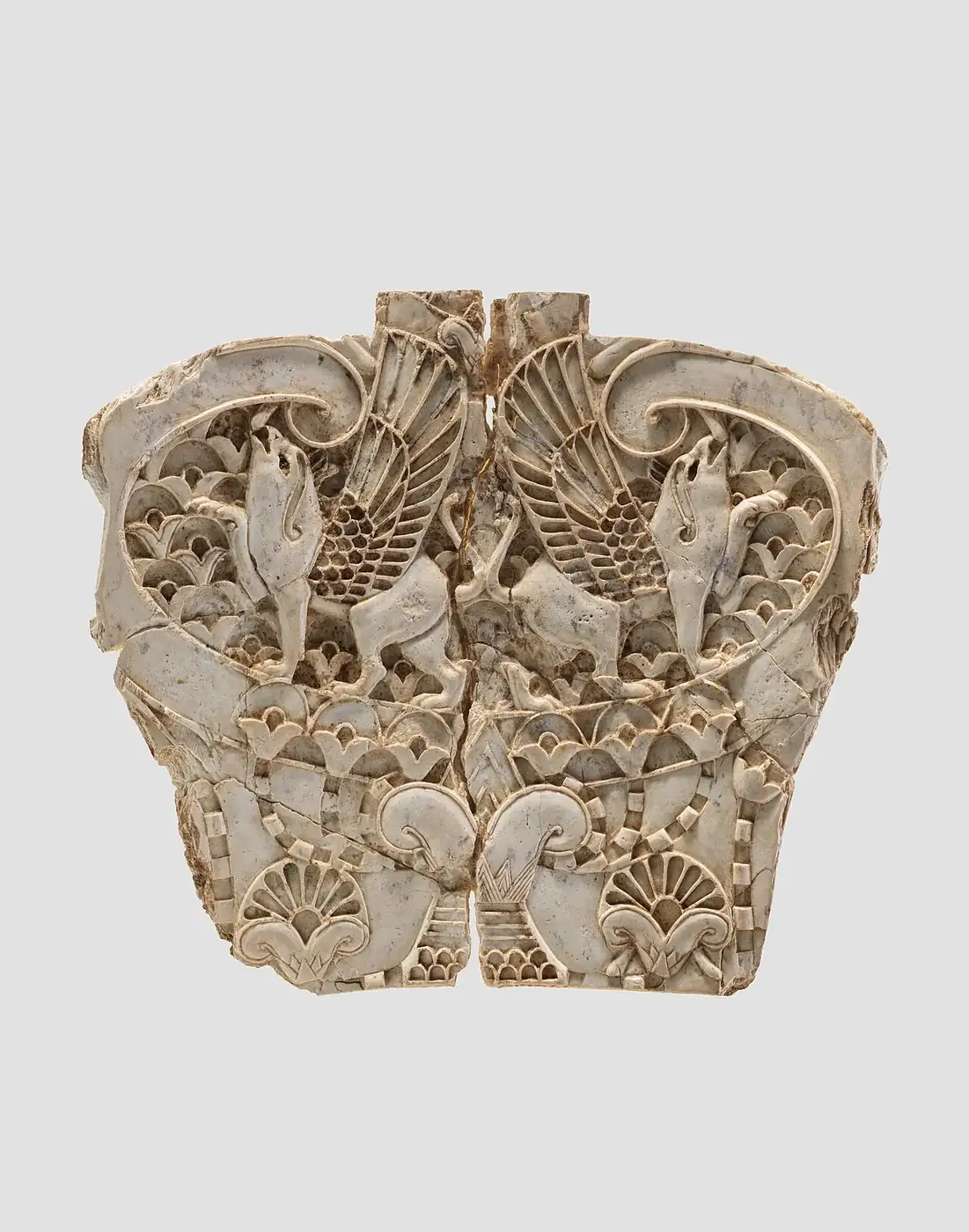
At the Assyrian capital of Ashur, craftsmen influenced by Phoenician and Syrian styles produced fine ivory carvings featuring griffins, goddesses, and trees of life.1 These artworks were used to decorate palace furniture and temple altars, reflecting the upper class's demand for luxuries and Assyria's cultural exchanges with the West.2 Such ivories have been excavated in large quantities from the Nimrud treasury, demonstrating the artistic prosperity of the early Neo-Assyrian period.3
Evidence ledger
3 claims0 sourced3 unsourced
Every hard fact in the narrative above is registered here. A claim may also record source-only details that the narrative does not repeat; the related-narrative line points to the corresponding passage, not a guarantee that the source supports every word of the body. A claim without a source stays visibly unsourced.
No source registered. This assertion remains unverified.
Bulk context rewrite; sources pending
These artworks were used to decorate palace furniture and temple altars, reflecting the upper class's demand for luxuries and Assyria's cultural exchanges with the West.
Related narrativeThese artworks were used to decorate palace furniture and temple altars, reflecting the upper class's demand for luxuries and Assyria's cultural exchanges with the West.
No source registered. This assertion remains unverified.
Bulk context rewrite; sources pending
Such ivories have been excavated in large quantities from the Nimrud treasury, demonstrating the artistic prosperity of the early Neo-Assyrian period.
Related narrativeSuch ivories have been excavated in large quantities from the Nimrud treasury, demonstrating the artistic prosperity of the early Neo-Assyrian period.
No source registered. This assertion remains unverified.
Bulk context rewrite; sources pending
Sources and review
English translation predates the current source revision; 3 key claims have no binding source; Unsourced key claims keep the event at structure level
- Ivories from Nimrud VI · The British Institute for the Study of Iraq (accessed 2026-11-20) Original source ↗
Locations
- Assyria· 35.9, 43.2· Approximate
evt-f66e09e2fa9ce6f6Source file:
events/evt-f66e09e2fa9ce6f6/event.md