
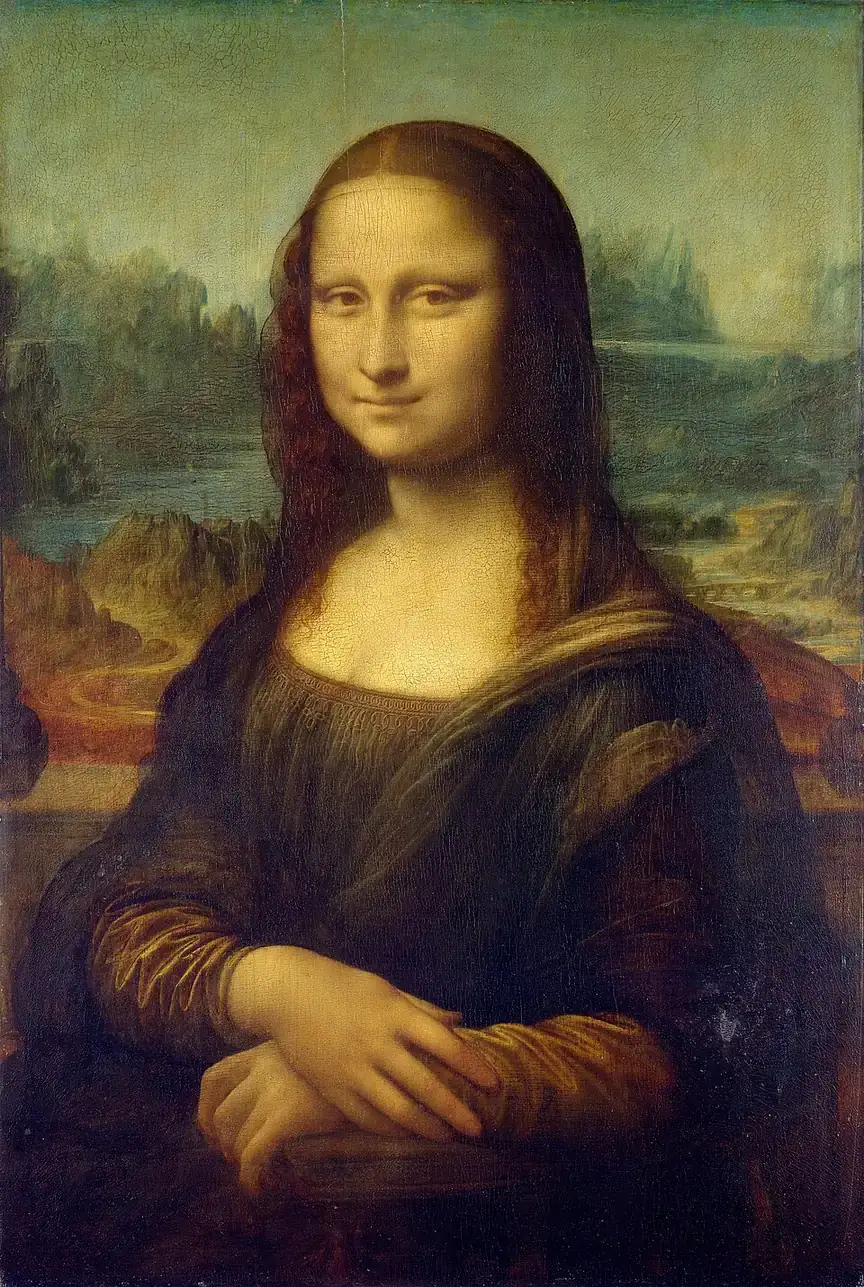
Leonardo da Vinci began painting a portrait of Lisa Gherardini, the wife of a silk merchant from Florence.1 He used the sfumato technique, blending the corners of the mouth and eyes into the shadows to create an enigmatic smile.2 The painting never left da Vinci's side until his death and later became the Louvre's most treasured masterpiece.3
Evidence ledger
3 claims0 sourced3 unsourced
Every hard fact in the narrative above is registered here. A claim may also record source-only details that the narrative does not repeat; the related-narrative line points to the corresponding passage, not a guarantee that the source supports every word of the body. A claim without a source stays visibly unsourced.
No source registered. This assertion remains unverified.
Rebuilt after English expansion; unverified.
He used the sfumato technique, blending the corners of the mouth and eyes into the shadows to create an enigmatic smile.
Related narrativeHe used the sfumato technique, blending the corners of the mouth and eyes into the shadows to create an enigmatic smile.
No source registered. This assertion remains unverified.
Rebuilt after English expansion; unverified.
The painting never left da Vinci's side until his death and later became the Louvre's most treasured masterpiece.
Related narrativeThe painting never left da Vinci's side until his death and later became the Louvre's most treasured masterpiece.
No source registered. This assertion remains unverified.
Rebuilt after English expansion; unverified.
Sources and review
English translation predates the current source revision; 3 key claims have no binding source; Unsourced key claims keep the event at structure level
- From the 'Mona Lisa' to 'The Wedding Feast at Cana' — Musée du Louvre · Musée du Louvre (accessed 2026-11-20) Original source ↗
Locations
- Italy· 43.77, 11.25· Approximate
evt-ebef49d02d1fff00Source file:
events/evt-ebef49d02d1fff00/event.md