
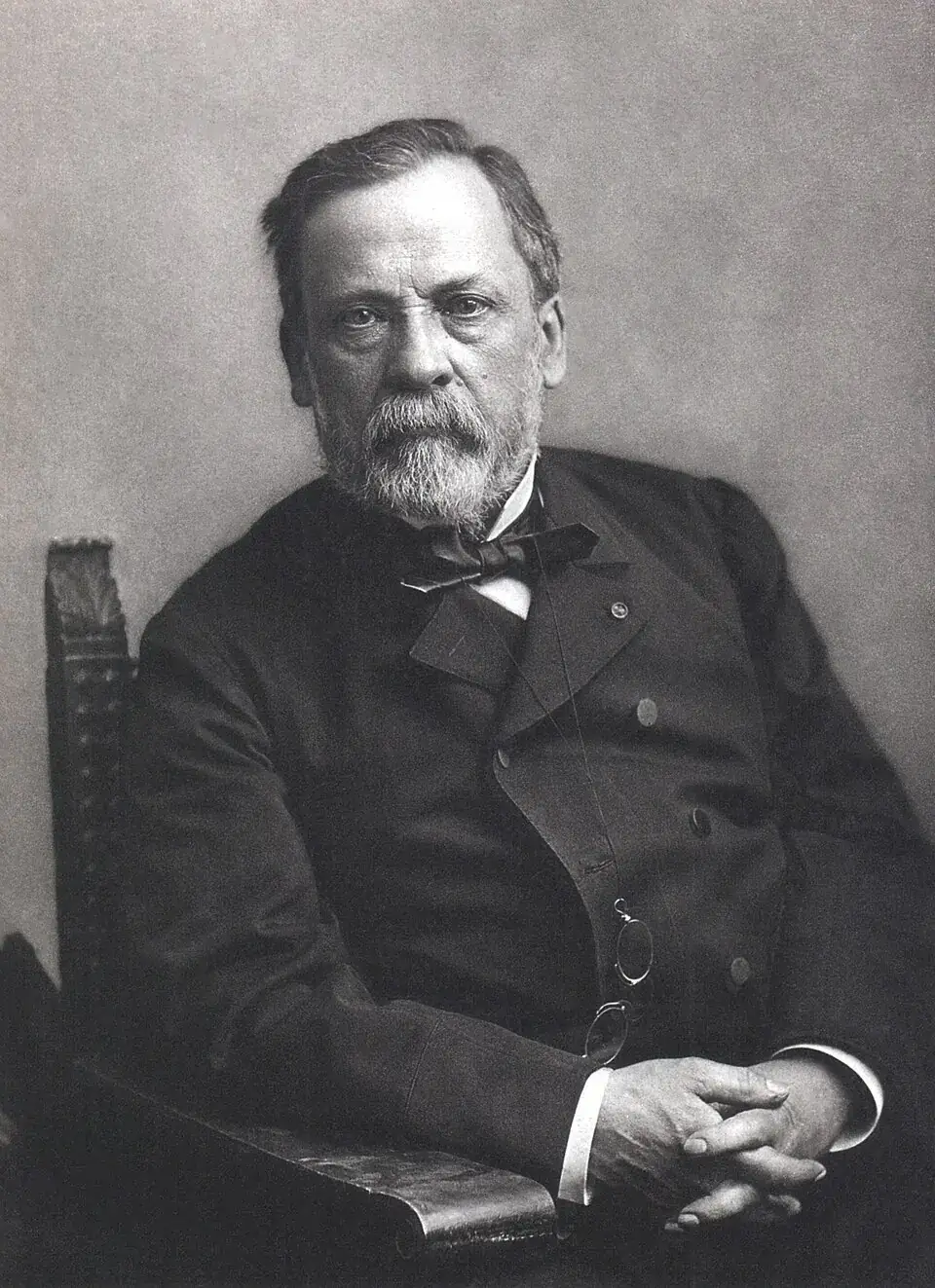
In 1881 Louis Pasteur developed an anthrax vaccine.1 He tested it in a public trial at Pouilly-le-Fort. The vaccinated group comprised 24 sheep, 1 goat and 6 cows; the control group comprised 24 sheep, 1 goat and 4 cows. The vaccinated sheep and goat survived exposure to a virulent anthrax culture, while all 24 unvaccinated sheep and the unvaccinated goat died.2 The unvaccinated cows did not die, but they developed marked swelling and fever, whereas the vaccinated cows remained healthy.3
The trial showed that a prepared vaccine could train the body to resist a lethal disease, giving artificial immunity a practical demonstration. Its design—a vaccinated group, a control group and an outcome open to witnesses—became a template for later public vaccine trials.
Evidence ledger
4 claims3 sourced0 unsourced1 author judgment
Every hard fact in the narrative above is registered here. A claim may also record source-only details that the narrative does not repeat; the related-narrative line points to the corresponding passage, not a guarantee that the source supports every word of the body. A claim without a source stays visibly unsourced.
In 1881 Louis Pasteur developed an anthrax vaccine.
Related narrativeIn 1881 Louis Pasteur developed an anthrax vaccine.
- Louis Pasteur: a universal legacyTimeline: 1881
1881 — Development of an anthrax vaccine. Start of research on rabies.
Accessed 2026-11-09 · machine excerpt · pending human review
- Louis Pasteur: a universal legacyTimeline: 1881
The vaccinated sheep and goat survived exposure to a virulent anthrax culture, while all 24 unvaccinated sheep and the unvaccinated goat died.
Related narrativeThe vaccinated sheep and goat survived exposure to a virulent anthrax culture, while all 24 unvaccinated sheep and the unvaccinated goat died.
- Summary Report of the Experiments Conducted at Pouilly-le-Fort, Near Melun, on the Anthrax VaccinationReport of 2 June 1881, results paragraph (PDF pp. 61–62)
The twenty-four sheep, the goat, and the six cows which had received the vaccinations of attenuated anthrax, all appeared healthy. In contrast, twenty-one sheep and the goat which had not been vaccinated had already died of anthrax; two other unvaccinated sheep died in front of the viewers, and the one remaining sheep died at the end of the day.
Accessed 2026-11-20 · machine excerpt · pending human review
- Summary Report of the Experiments Conducted at Pouilly-le-Fort, Near Melun, on the Anthrax VaccinationReport of 2 June 1881, results paragraph (PDF pp. 61–62)
The unvaccinated cows did not die, but they developed marked swelling and fever, whereas the vaccinated cows remained healthy.
Related narrativeThe unvaccinated cows did not die, but they developed marked swelling and fever, whereas the vaccinated cows remained healthy.
- Summary Report of the Experiments Conducted at Pouilly-le-Fort, Near Melun, on the Anthrax VaccinationReport of 2 June 1881, cow addendum and results (PDF pp. 61–62)
On May 5, 1881, we used a Pravaz syringe to inoculate twenty-four sheep, one goat and six cows each with five drops attenuated anthrax. ... we inoculated ... twenty-four other sheep, one goat and four other cows, none of which had been exposed to this treatment previously. ... The unvaccinated cows had not died ... all showed significant edema at the place right behind the shoulder ... The temperature of these cows increased ...
Accessed 2026-11-20 · machine excerpt · pending human review
- Summary Report of the Experiments Conducted at Pouilly-le-Fort, Near Melun, on the Anthrax VaccinationReport of 2 June 1881, cow addendum and results (PDF pp. 61–62)
The overall context of the event body.
Related narrativeIn 1881 Louis Pasteur developed an anthrax vaccine. He tested it in a public trial at Pouilly-le-Fort. The vaccinated group comprised 24 sheep, 1 goat and 6 cows; the control group comprised 24 sheep, 1 goat and 4 cows. The vaccinated sheep and goat survived exposure to a virulent anthrax culture, while all 24 unvaccinated sheep and the unvaccinated goat died. The unvaccinated cows did not die, but they developed marked swelling and fever, whereas the vaccinated cows remained healthy. The trial showed that a prepared vaccine could train the body to resist a lethal disease, giving artificial immunity a practical demonstration. Its design—a vaccinated group, a control group and an outcome open to witnesses—became a template for later public vaccine trials.
Editorial judgment, not a historical fact.
Author judgment covering the body context; not a factual source.
Sources and review
- Louis Pasteur: a universal legacy · Institut Pasteur (accessed 2026-11-09) Original source ↗
- Summary Report of the Experiments Conducted at Pouilly-le-Fort, Near Melun, on the Anthrax Vaccination · Yale Journal of Biology and Medicine / PubMed Central (accessed 2026-11-20) Original source ↗
Locations
- France· 48.85, 2.35· Approximate
evt-beb2e178ad8ef0ceSource file:
events/evt-beb2e178ad8ef0ce/event.md