
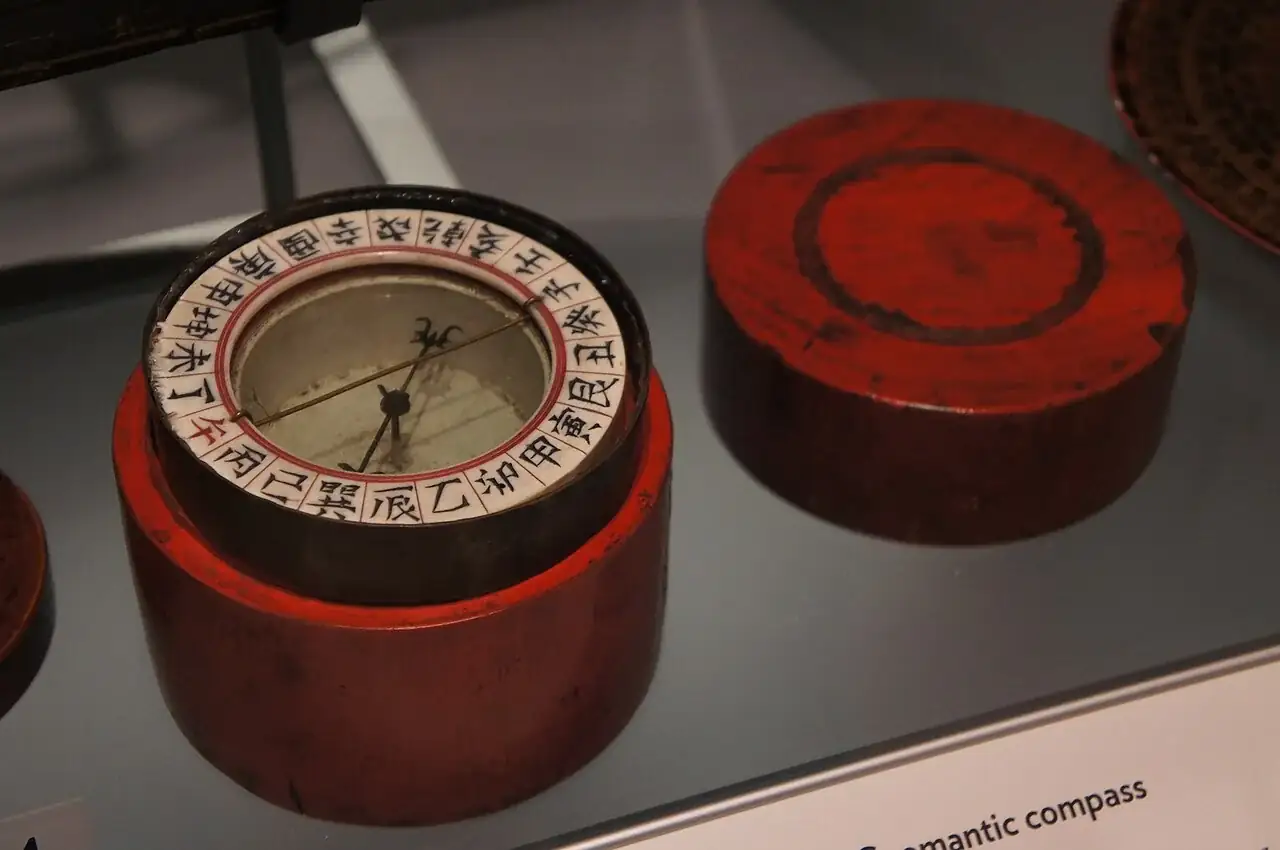
The Song author Zhu Yu, in his Pingzhou Ketan (Conversations from Pingzhou), wrote: 'Navigators recognize directions by the stars at night, by the sun in the day, and by the compass when it is cloudy.' This is the earliest clear record of the use of the compass in maritime history.1 Song merchant ships were equipped with floating magnetic needles (a magnetized needle floated in water on a piece of rush), used for navigation on overcast days and at night. The compass allowed Chinese ships to move away from coastal routes, crossing the South China Sea and the Indian Ocean directly, reaching as far as East Africa. This technology later reached Europe via the Arabs, ushering in the Age of Discovery.1
Evidence ledger
1 claims0 sourced1 unsourced
Every hard fact in the narrative above is registered here. A claim may also record source-only details that the narrative does not repeat; the related-narrative line points to the corresponding passage, not a guarantee that the source supports every word of the body. A claim without a source stays visibly unsourced.
No source registered. This assertion remains unverified.
Whole-body alignment; bulk context rewrite
Sources and review
English translation predates the current source revision; 1 key claims have no binding source; Unsourced key claims keep the event at structure level
- 中国古代航海技术上的成就 — 中国科学院自然科学史研究所 · 中国科学院自然科学史研究所 (accessed 2026-11-20) Original source ↗
Locations
- Northern Song· 23.1, 113.3· Approximate
evt-be7e95275a82bef4Source file:
events/evt-be7e95275a82bef4/event.md