
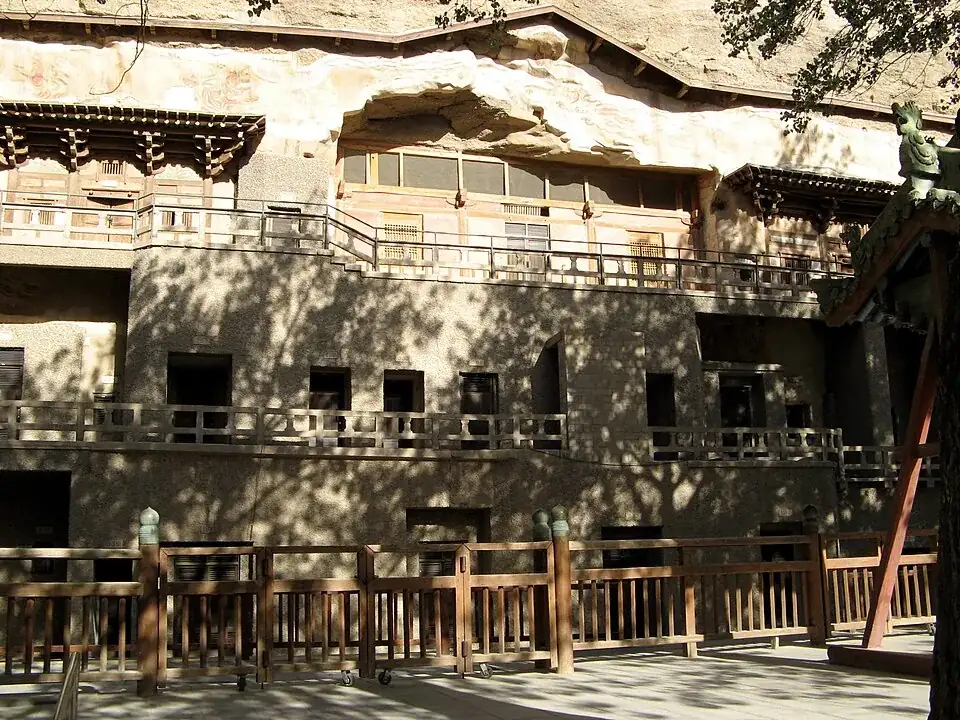
The Former Liang monk Le Zun cut the first cave on the cliff opposite the Sanwei Mountains southeast of Dunhuang, for meditation and worship.1 Thereafter the Mogao Caves were expanded for a thousand years, becoming the world's largest and longest-lasting treasury of Buddhist art. Monks, laypeople and local regimes built them together, and paintings and sculptures accumulated layer on layer; trade routes and monastic wealth supported the craftsmen, and Buddhist art took root in the oasis.1
Evidence ledger
1 claims0 sourced1 unsourced
Every hard fact in the narrative above is registered here. A claim may also record source-only details that the narrative does not repeat; the related-narrative line points to the corresponding passage, not a guarantee that the source supports every word of the body. A claim without a source stays visibly unsourced.
No source registered. This assertion remains unverified.
Sources and review
English translation predates the current source revision; 1 key claims have no binding source; Unsourced key claims keep the event at structure level
- Mogao Caves — UNESCO World Heritage Centre · UNESCO World Heritage Centre (accessed 2026-11-20) Original source ↗
Locations
- Former Liang· 40.04, 94.8· Approximate
evt-b81263f273040b38Source file:
events/evt-b81263f273040b38/event.md