
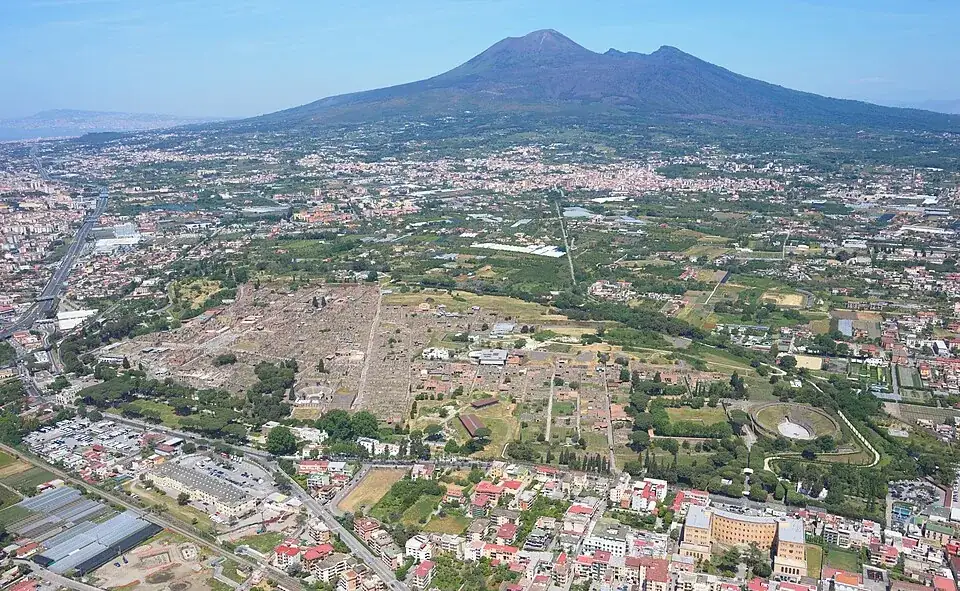
On August 24, Mount Vesuvius violently erupted.1 Volcanic ash and pumice buried Pompeii, Herculaneum and other cities within hours, killing about 20,000 people.2 Disaster destruction and preservation are two sides of the same process: volcanic debris quickly sealed streets, houses and daily artifacts, making these cities the most direct samples of ancient Roman life during subsequent excavations.3 If we put "Vesuvius in Rome erupted and Pompeii was buried" back to the Roman Empire in 79 CE, we can see a specific aspect of the changes in the disaster.4
Evidence ledger
4 claims0 sourced4 unsourced
Every hard fact in the narrative above is registered here. A claim may also record source-only details that the narrative does not repeat; the related-narrative line points to the corresponding passage, not a guarantee that the source supports every word of the body. A claim without a source stays visibly unsourced.
On August 24, Mount Vesuvius violently erupted.
Related narrativeOn August 24, Mount Vesuvius violently erupted.
No source registered. This assertion remains unverified.
Rebuilt after English expansion; unverified.
Volcanic ash and pumice buried Pompeii, Herculaneum and other cities within hours, killing about 20,000 people.
Related narrativeVolcanic ash and pumice buried Pompeii, Herculaneum and other cities within hours, killing about 20,000 people.
No source registered. This assertion remains unverified.
Rebuilt after English expansion; unverified.
Disaster destruction and preservation are two sides of the same process: volcanic debris quickly sealed streets, houses and daily artifacts, making these cities the most direct samples of ancient Roman life during subsequent excavations.
Related narrativeDisaster destruction and preservation are two sides of the same process: volcanic debris quickly sealed streets, houses and daily artifacts, making these cities the most direct samples of ancient Roman life during subsequent excavations.
No source registered. This assertion remains unverified.
Rebuilt after English expansion; unverified.
If we put "Vesuvius in Rome erupted and Pompeii was buried" back to the Roman Empire in 79 CE, we can see a specific aspect of the changes in the disaster.
Related narrativeIf we put "Vesuvius in Rome erupted and Pompeii was buried" back to the Roman Empire in 79 CE, we can see a specific aspect of the changes in the disaster.
No source registered. This assertion remains unverified.
Rebuilt after English expansion; unverified.
Sources and review
English translation predates the current source revision; 4 key claims have no binding source; Unsourced key claims keep the event at structure level
Locations
- Roman Empire· 40.8, 14.4· Approximate
evt-a1b93d7c16fa38fdSource file:
events/evt-a1b93d7c16fa38fd/event.md