
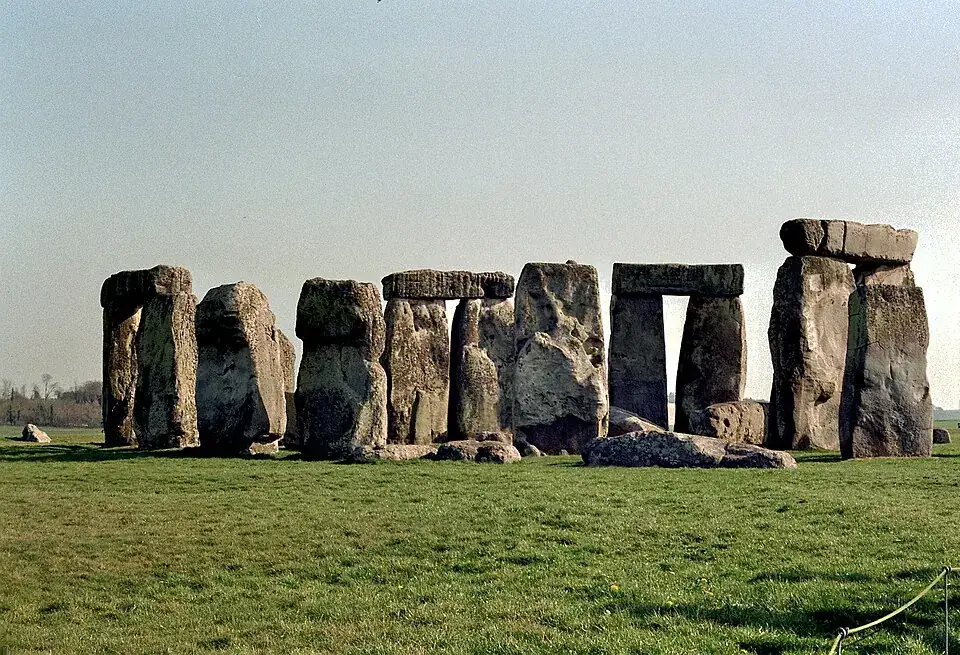
The first monument at Stonehenge was a circular earthwork enclosure built in about 3000 BC.1 A ditch was dug with simple antler tools, and the chalk was piled up to make an inner and an outer bank.2,6 Within the ditch was a ring of 56 timber or stone posts.3 In about 2500 BC the site was transformed by the construction of the central stone settings.4 Placing “Stonehenge: first earthwork enclosure, c.5 3000 BCE” in 3000 BCE Europe, it connects earlier and later change in Architecture.5
The first monument at Stonehenge was a circular earthwork enclosure built in about 3000 BCE.6 A ditch was dug with simple antler tools, and the chalk was piled up to make an inner and an outer bank. Within the ditch was a ring of 56 timber or stone posts. In about 2500 BCE the site was transformed by the construction of the central stone settings. Placing “Stonehenge: first earthwork enclosure, c. 3000 BCE” in 3000 BCE Europe, it connects earlier and later change in Architecture.
Evidence ledger
6 claims4 sourced0 unsourced2 author judgment
Every hard fact in the narrative above is registered here. A claim may also record source-only details that the narrative does not repeat; the related-narrative line points to the corresponding passage, not a guarantee that the source supports every word of the body. A claim without a source stays visibly unsourced.
The first monument at Stonehenge was a circular earthwork enclosure built in about 3000 BC.
Related narrativeThe first monument at Stonehenge was a circular earthwork enclosure built in about 3000 BC.
- Building StonehengeSection: The first monument
The first monument at Stonehenge was a circular earthwork enclosure, built in about 3000 BC.
Accessed 2026-11-09 · machine excerpt · pending human review - History of StonehengeThe Earliest Monument
the earliest known major event was the construction of a circular ditch with an inner and outer bank, built about 3000 BC. This enclosed an area about 100 metres in diameter
Accessed 2026-11-20 · machine excerpt · pending human review
- Building StonehengeSection: The first monument
A ditch was dug with simple antler tools, and the chalk was piled up to make an inner and an outer bank.
Related narrativeA ditch was dug with simple antler tools, and the chalk was piled up to make an inner and an outer bank.
- Building StonehengeSection: The first monument
A ditch was dug with simple antler tools, and the chalk piled up to make an inner and an outer bank.
Accessed 2026-11-09 · machine excerpt · pending human review
- Building StonehengeSection: The first monument
Within the ditch was a ring of 56 timber or stone posts.
Related narrativeWithin the ditch was a ring of 56 timber or stone posts.
- Building StonehengeSection: The first monument
Within the ditch was a ring of 56 timber or stone posts.
Accessed 2026-11-09 · machine excerpt · pending human review - History of StonehengeThe Earliest Monument
the earliest known major event was the construction of a circular ditch with an inner and outer bank, built about 3000 BC. This enclosed an area about 100 metres in diameter
Accessed 2026-11-20 · machine excerpt · pending human review
- Building StonehengeSection: The first monument
In about 2500 BC the site was transformed by the construction of the central stone settings.
Related narrativeIn about 2500 BC the site was transformed by the construction of the central stone settings.
- Building StonehengeSection: The first monument
In about 2500 BC the site was transformed by the construction of the central stone settings.
Accessed 2026-11-09 · machine excerpt · pending human review
- Building StonehengeSection: The first monument
Placing “Stonehenge: first earthwork enclosure, c. 3000 BCE” in 3000 BCE Europe, it connects earlier and later change in Architecture.
Related narrativePlacing “Stonehenge: first earthwork enclosure, c. 3000 BCE” in 3000 BCE Europe, it connects earlier and later change in Architecture.
Editorial judgment, not a historical fact.
Context sentence; does not replace the sourced claims
The first monument at Stonehenge was a circular earthwork enclosure built in about 3000 BCE. A ditch was dug with simple antler tools, and the chalk was piled up to make an inner and an outer bank. Within the ditch was a ring of 56 timber or stone posts. In about 2500 BCE the site was transformed by the construction of the central stone settings. Placing “Stonehenge: first earthwork enclosure, c. 3000 BCE” in 3000 BCE Europe, it connects earlier and later change in Architecture. It sits within the timeline's chronological coverage of England and architecture history. The event is treated as one node in a longer sequence of change across Europe. The record is presented as part of the wider history of England rather than as an isolated incident.
Related narrativeThe first monument at Stonehenge was a circular earthwork enclosure built in about 3000 BCE.
Editorial judgment, not a historical fact.
Editorial context; not a sourced factual claim.
Sources and review
Cross-check · 2026-11-20 · English Heritage and the existing architectural-history source both support the c. 3000 BC circular ditch and banks; English Heritage also records the 56 Aubrey Holes, and the body adds no unsupported detail.
- Building Stonehenge · English Heritage (accessed 2026-11-04) Original source ↗
- History of Stonehenge · English Heritage (accessed 2026-11-20) Original source ↗
Title, dating qualifiers and rewritten body compared with the cited institutional records.
AI-assisted source comparison, not external expert certification. Legacy map coordinates, other events and whole-topic verification are outside this review scope.
Locations
- England· 51.18, -1.83· Approximate
evt-a0cacfbdff755ce5Source file:
events/evt-a0cacfbdff755ce5/event.md