
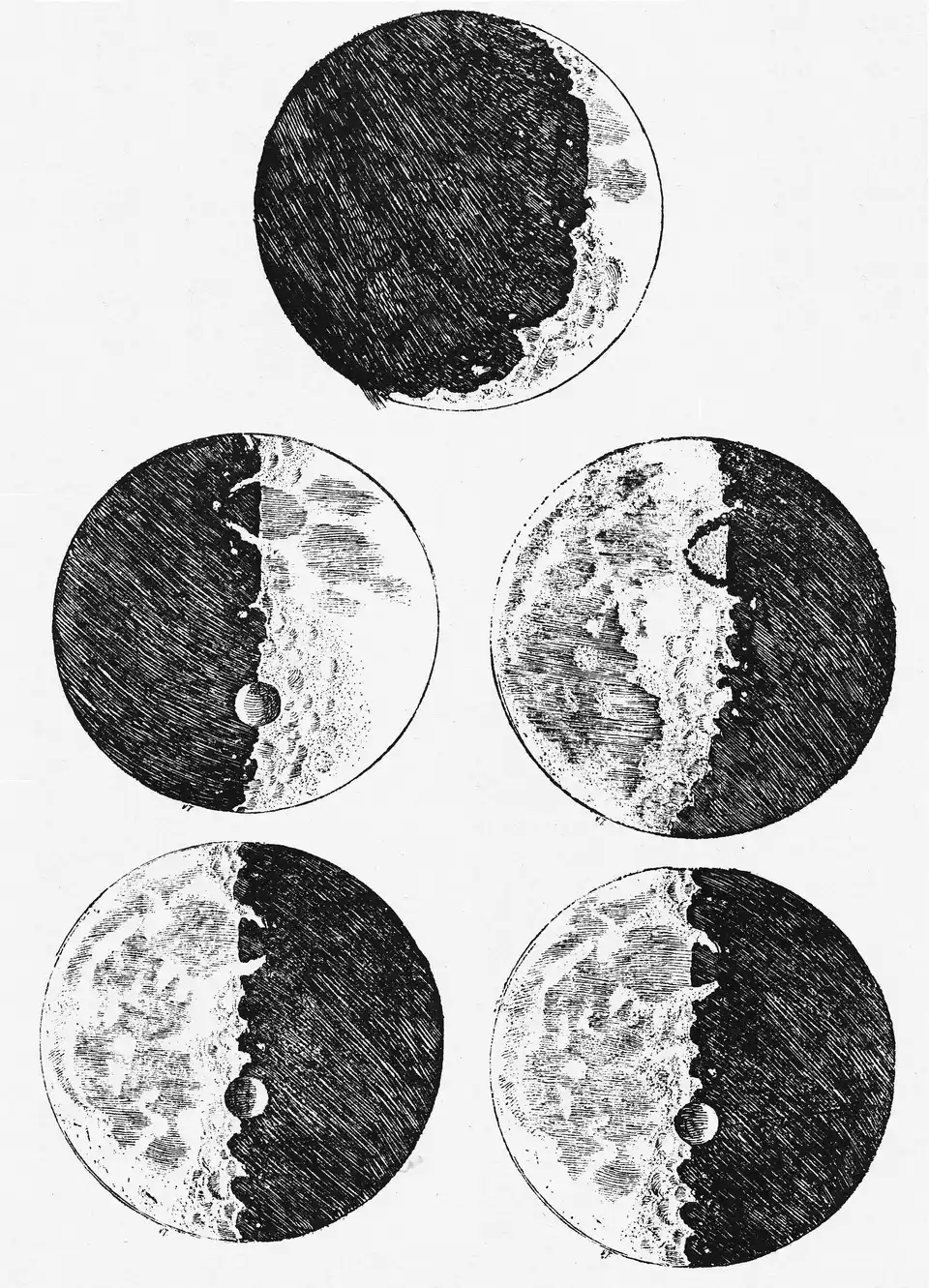
In March, Galileo published 'Sidereus Nuncius' in Venice, unveiling his telescopic discoveries: the Moon's rough surface, that the Milky Way is composed of countless stars, and four moons orbiting Jupiter.1 The work caused a sensation in European intellectual circles, and Galileo was appointed chief mathematician and philosopher to the Grand Duke of Tuscany.2 However, conservative churchmen began to view him with suspicion.3
Evidence ledger
3 claims0 sourced3 unsourced
Every hard fact in the narrative above is registered here. A claim may also record source-only details that the narrative does not repeat; the related-narrative line points to the corresponding passage, not a guarantee that the source supports every word of the body. A claim without a source stays visibly unsourced.
No source registered. This assertion remains unverified.
Rebuilt after English expansion; unverified.
The work caused a sensation in European intellectual circles, and Galileo was appointed chief mathematician and philosopher to the Grand Duke of Tuscany.
Related narrativeThe work caused a sensation in European intellectual circles, and Galileo was appointed chief mathematician and philosopher to the Grand Duke of Tuscany.
No source registered. This assertion remains unverified.
Rebuilt after English expansion; unverified.
However, conservative churchmen began to view him with suspicion.
Related narrativeHowever, conservative churchmen began to view him with suspicion.
No source registered. This assertion remains unverified.
Rebuilt after English expansion; unverified.
Sources and review
English translation predates the current source revision; 3 key claims have no binding source; Unsourced key claims keep the event at structure level
Locations
- Italy· 45.44, 12.33· Approximate
evt-8094561f2a147325Source file:
events/evt-8094561f2a147325/event.md