
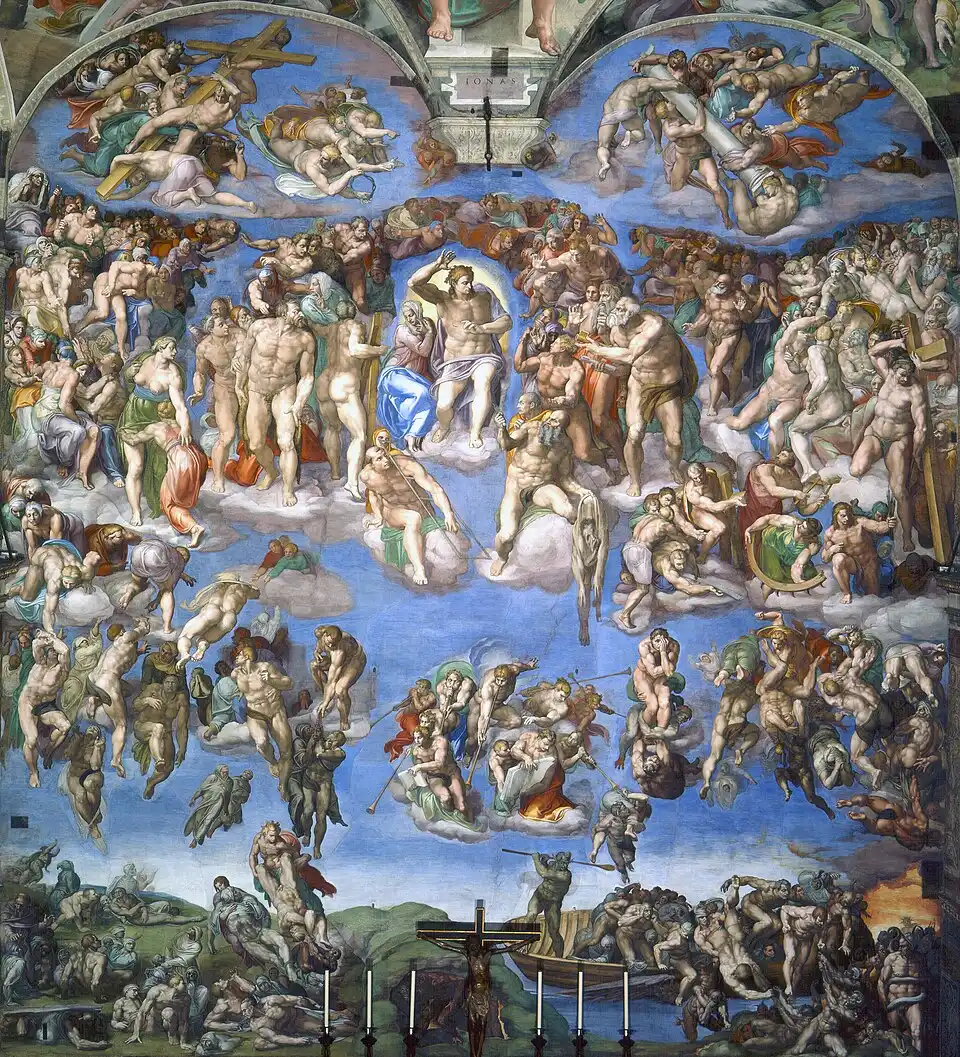
Between 1536 and 1541 Michelangelo paints The Last Judgment on the altar wall of the Sistine Chapel.1 Hundreds of nude figures rise and fall in a vast vision of the final judgement, their powerful bodies charged with movement; the bold nudity later provoked controversy and was partly overpainted.2
Evidence ledger
2 claims0 sourced2 unsourced
Every hard fact in the narrative above is registered here. A claim may also record source-only details that the narrative does not repeat; the related-narrative line points to the corresponding passage, not a guarantee that the source supports every word of the body. A claim without a source stays visibly unsourced.
No source registered. This assertion remains unverified.
Rebuilt after English expansion; unverified.
Hundreds of nude figures rise and fall in a vast vision of the final judgement, their powerful bodies charged with movement; the bold nudity later provoked controversy and was partly overpainted.
Related narrativeHundreds of nude figures rise and fall in a vast vision of the final judgement, their powerful bodies charged with movement; the bold nudity later provoked controversy and was partly overpainted.
No source registered. This assertion remains unverified.
Rebuilt after English expansion; unverified.
Sources and review
English translation predates the current source revision; 2 key claims have no binding source; Unsourced key claims keep the event at structure level
Locations
- Italy· 41.9, 12.45· Approximate
evt-6798b96b72c2d9dbSource file:
events/evt-6798b96b72c2d9db/event.md