
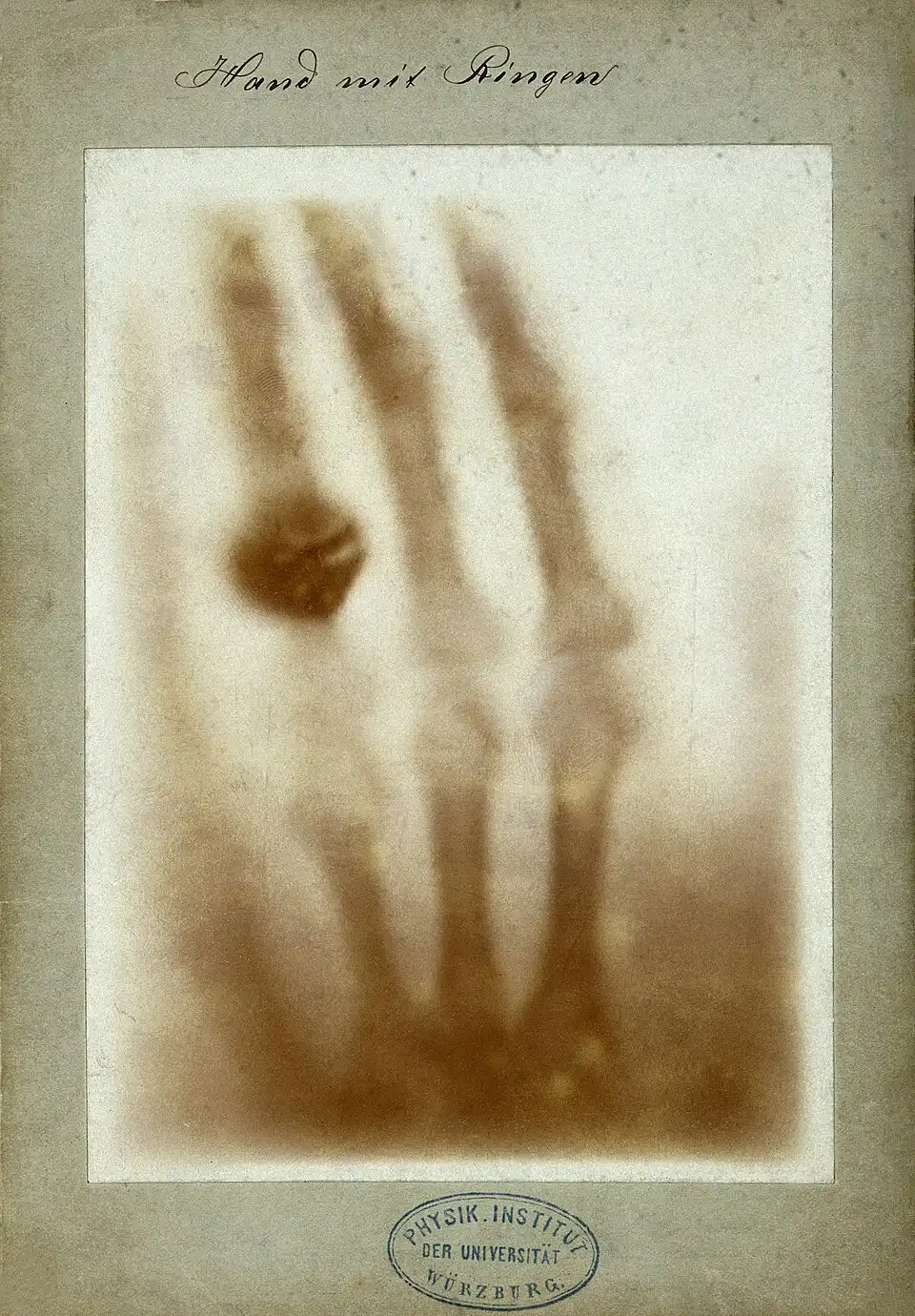
German physicist Wilhelm Conrad Roentgen discovered X-rays (called "new rays" at the time) in his experiments and took the world's first X-ray of human bones (his wife's hand).1 X-rays revolutionized medical diagnosis, and Roentgen won the first Nobel Prize in Physics in 1901.2
Evidence ledger
2 claims0 sourced2 unsourced
Every hard fact in the narrative above is registered here. A claim may also record source-only details that the narrative does not repeat; the related-narrative line points to the corresponding passage, not a guarantee that the source supports every word of the body. A claim without a source stays visibly unsourced.
No source registered. This assertion remains unverified.
Rebuilt after English expansion; unverified.
X-rays revolutionized medical diagnosis, and Roentgen won the first Nobel Prize in Physics in 1901.
Related narrativeX-rays revolutionized medical diagnosis, and Roentgen won the first Nobel Prize in Physics in 1901.
No source registered. This assertion remains unverified.
Rebuilt after English expansion; unverified.
Sources and review
English translation predates the current source revision; 2 key claims have no binding source; Unsourced key claims keep the event at structure level
Locations
- Germany· 49.8, 9.9· Approximate
evt-50d17e34632d5358Source file:
events/evt-50d17e34632d5358/event.md