
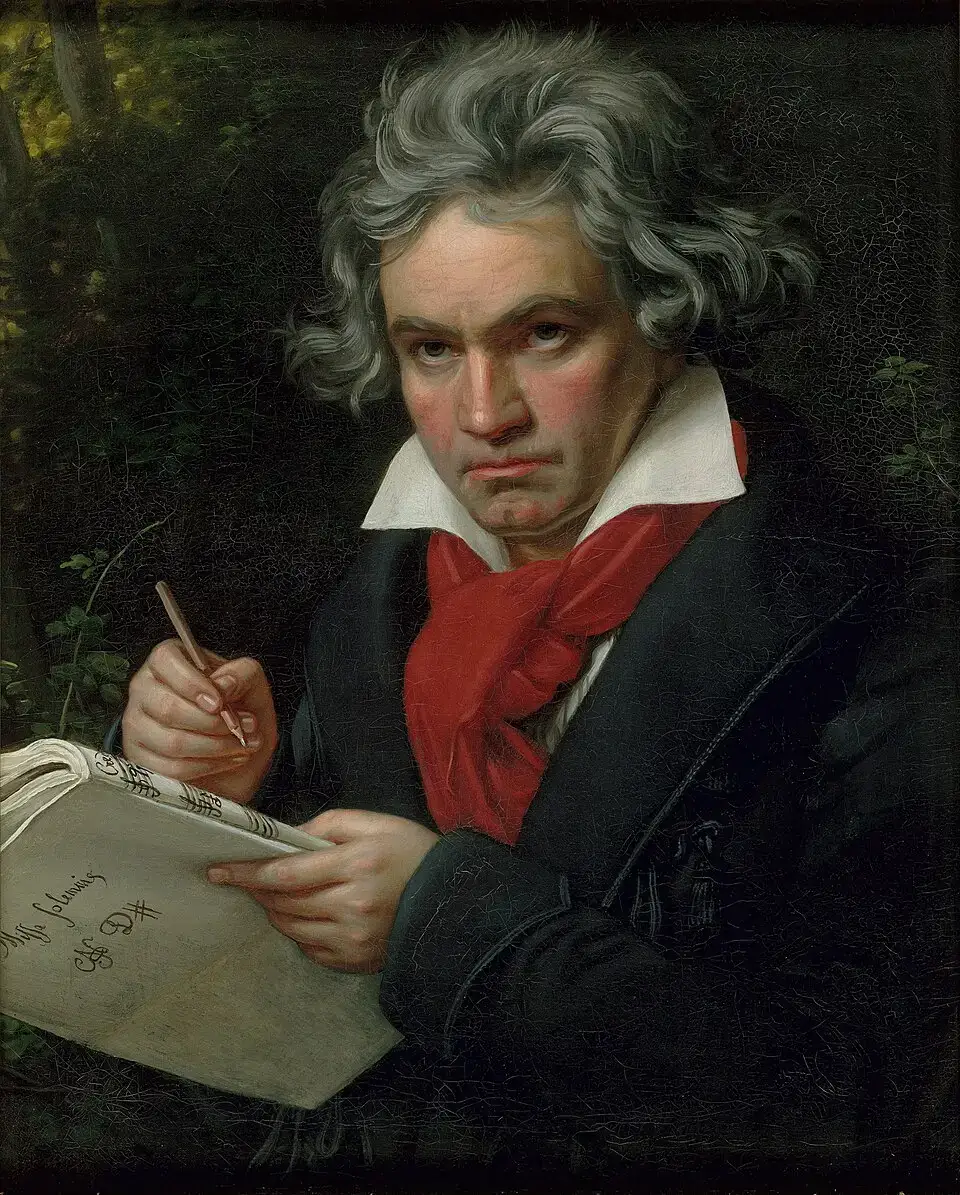
In 1824 the deaf Beethoven premiered the Ninth Symphony in Vienna; its finale sets Schiller's 'Ode to Joy' for voices, hymning freedom and human brotherhood — an epoch-making work in the history of the symphony.1 Breaking with convention in scoring and structure, the work brought chorus and soloists into the symphony; at the premiere the composer could hardly hear the applause.2 Music took on a public ideal.3
Evidence ledger
3 claims0 sourced3 unsourced
Every hard fact in the narrative above is registered here. A claim may also record source-only details that the narrative does not repeat; the related-narrative line points to the corresponding passage, not a guarantee that the source supports every word of the body. A claim without a source stays visibly unsourced.
No source registered. This assertion remains unverified.
Rebuilt after English expansion; unverified.
Breaking with convention in scoring and structure, the work brought chorus and soloists into the symphony; at the premiere the composer could hardly hear the applause.
Related narrativeBreaking with convention in scoring and structure, the work brought chorus and soloists into the symphony; at the premiere the composer could hardly hear the applause.
No source registered. This assertion remains unverified.
Rebuilt after English expansion; unverified.
Music took on a public ideal.
Related narrativeMusic took on a public ideal.
No source registered. This assertion remains unverified.
Rebuilt after English expansion; unverified.
Sources and review
English translation predates the current source revision; 3 key claims have no binding source; Unsourced key claims keep the event at structure level
Locations
- Germany· 48.2082, 16.3738· Approximate
evt-2e7a2bb33155eae7Source file:
events/evt-2e7a2bb33155eae7/event.md