
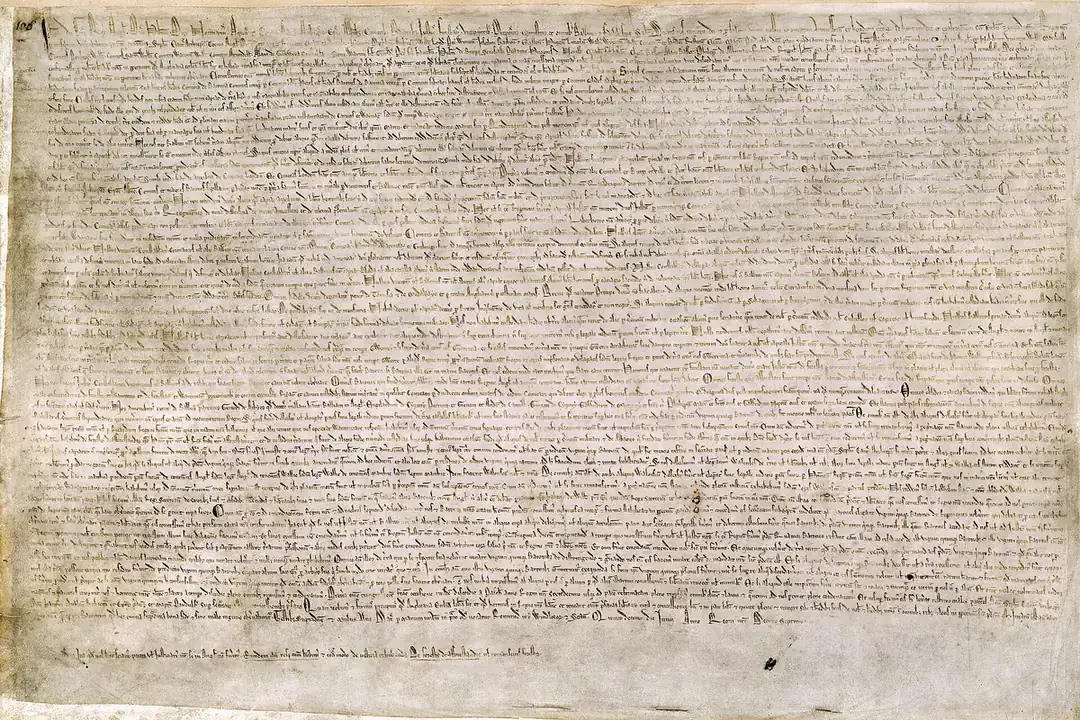
King John of England, because of his failed wars against France, heavy taxation, and interference in church affairs, provoked widespread baronial discontent.1 In May 1215, Robert Fitzwalter led a baronial army that occupied London.2 On 15 June, John was forced to accept 63 articles presented by the barons at Runnymede meadow near Windsor Castle, affixing his seal.3 The document, known as Magna Carta, included provisions such as: no taxation without common consent of the realm; no free man could be arrested, imprisoned, or dispossessed except by lawful judgment; cities like London had the right to self-government; the church had freedom of elections.4 Magna Carta established the principles of 'rule of law' and 'the king is below the law', becoming the cornerstone of English constitutional tradition.5
Evidence ledger
5 claims0 sourced5 unsourced
Every hard fact in the narrative above is registered here. A claim may also record source-only details that the narrative does not repeat; the related-narrative line points to the corresponding passage, not a guarantee that the source supports every word of the body. A claim without a source stays visibly unsourced.
No source registered. This assertion remains unverified.
Bulk context rewrite; sources pending
In May 1215, Robert Fitzwalter led a baronial army that occupied London.
Related narrativeIn May 1215, Robert Fitzwalter led a baronial army that occupied London.
No source registered. This assertion remains unverified.
Bulk context rewrite; sources pending
On 15 June, John was forced to accept 63 articles presented by the barons at Runnymede meadow near Windsor Castle, affixing his seal.
Related narrativeOn 15 June, John was forced to accept 63 articles presented by the barons at Runnymede meadow near Windsor Castle, affixing his seal.
No source registered. This assertion remains unverified.
Bulk context rewrite; sources pending
The document, known as Magna Carta, included provisions such as: no taxation without common consent of the realm; no free man could be arrested, imprisoned, or dispossessed except by lawful judgment; cities like London had the right to self-government; the church had freedom of elections.
Related narrativeThe document, known as Magna Carta, included provisions such as: no taxation without common consent of the realm; no free man could be arrested, imprisoned, or dispossessed except by lawful judgment; cities like London had the right to self-government; the church had freedom of elections.
No source registered. This assertion remains unverified.
Bulk context rewrite; sources pending
Magna Carta established the principles of 'rule of law' and 'the king is below the law', becoming the cornerstone of English constitutional tradition.
Related narrativeMagna Carta established the principles of 'rule of law' and 'the king is below the law', becoming the cornerstone of English constitutional tradition.
No source registered. This assertion remains unverified.
Bulk context rewrite; sources pending
Sources and review
English translation predates the current source revision; 5 key claims have no binding source; Unsourced key claims keep the event at structure level
- Magna Carta 1215 — The British Library · The British Library (accessed 2026-11-20) Original source ↗
Locations
- England· 51.4, -0.5· Approximate
evt-09e214f34390bca0Source file:
events/evt-09e214f34390bca0/event.md